
Cafés in Australia from Brisbane to Melbourne
Melbourne's laneways, Sydney's flat whites, Brisbane's roasters, Perth's arcades and Adelaide's East End, plus long blacks and 2026 prices.
Photo: Talha Resitoglu, Pexels License
Australia grows almost none of the coffee it drinks. About 40 commercial growers farm roughly 400 hectares in the tablelands of Far North Queensland, south-east Queensland and northern New South Wales, with capacity for around 800 tonnes a year, and less than 1% of the coffee Australians drink is home-grown.1 ANZ forecast imports of about 132,000 tonnes for 2022/23, close to 2% of world trade, mostly from Brazil, with Colombia, Papua New Guinea, Vietnam, Peru and Ethiopia next.2
Per head, Australians use the equivalent of about 4.5 kg of ground coffee a year, by US Department of Agriculture figures that ANZ cites.2 That comes to around 2 billion cups a year.1
Australia's café cities
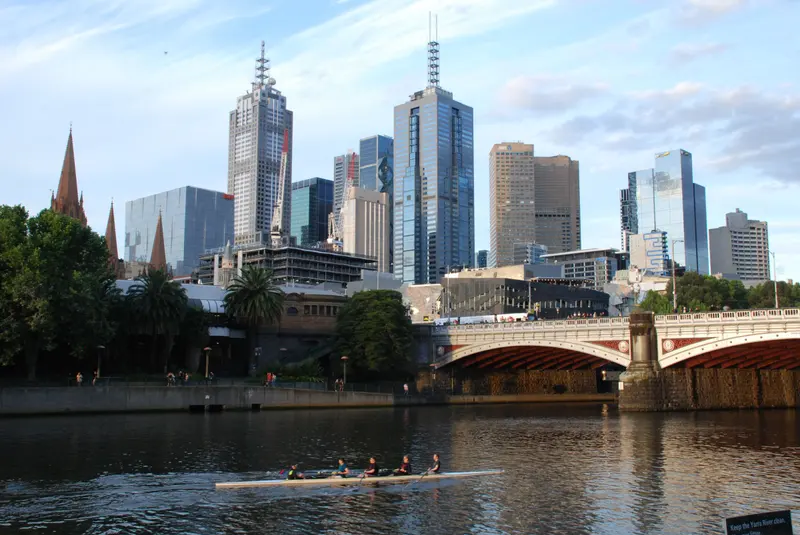
Melbourne
Flat whites in the CBD lanes, roasters in Collingwood warehouses and cakes on Acland Street. 1869 cafés.
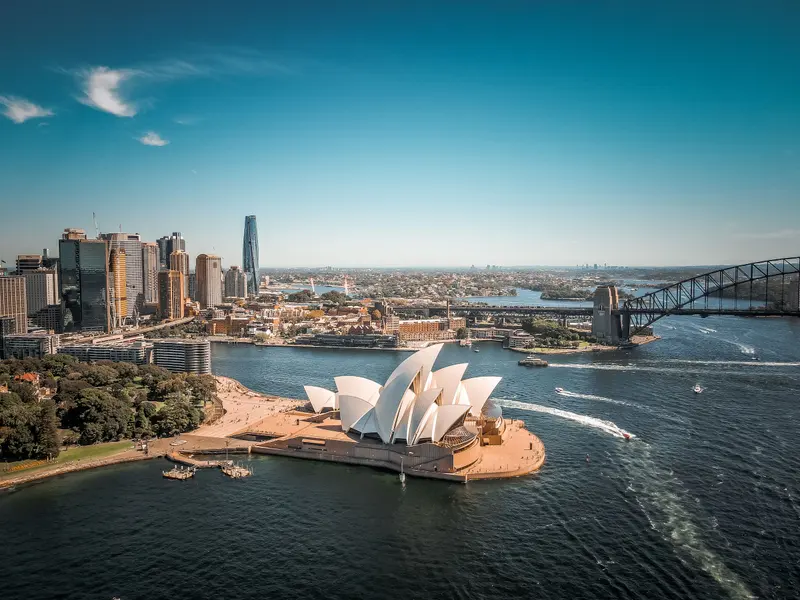
Sydney
Flat whites, long brunches and neighborhood roasters from Surry Hills to Marrickville. 1766 cafés.
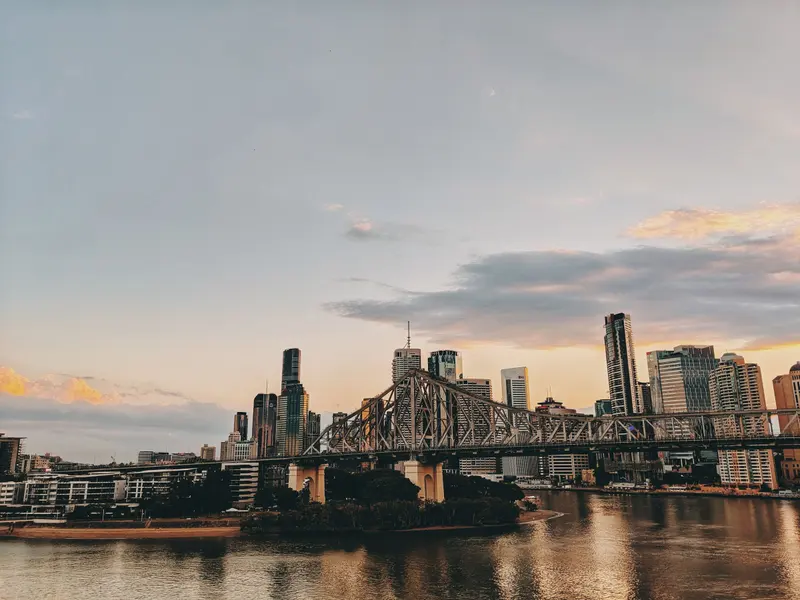
Brisbane
Charlotte Street laneway espresso, Montague Road roasters in West End and Teneriffe's wool stores. 770 cafés.
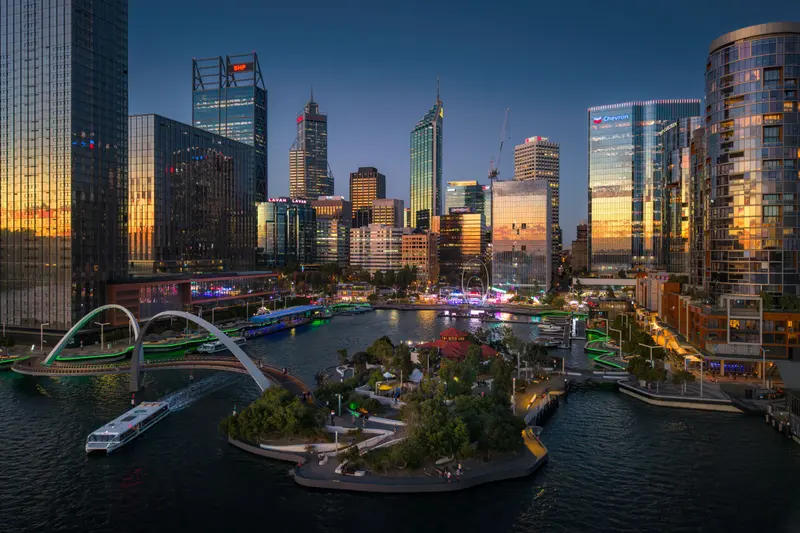
Perth
Arcade espresso off Hay Street Mall, late dessert cafés in Northbridge and terrace tables on Rokeby Road in Subiaco. 575 cafés.
Adelaide
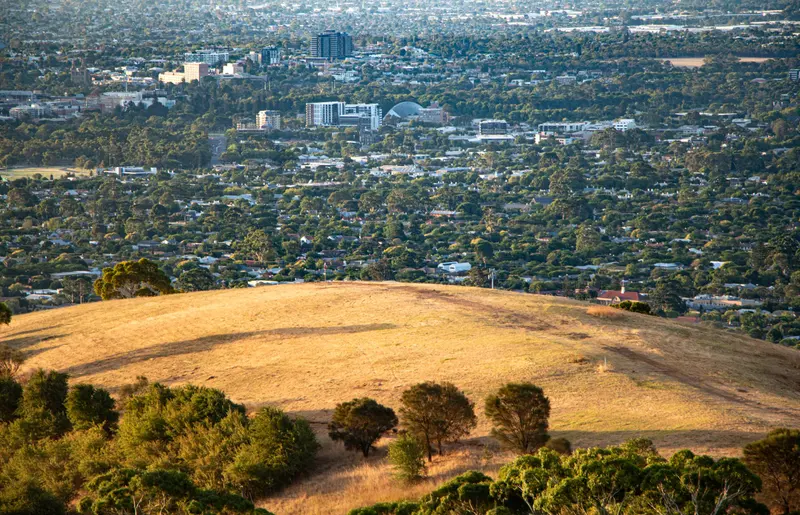
Flat whites in the East End, cafés on Rundle Street and the Central Market, and Norwood's Parade. 570 cafés.
Coffee palaces and milk bars: how espresso arrived
Melbourne drank coffee long before it drank espresso. Colonial street stalls on Hoddle's Grid sold it, all night until the early 1870s, and by the 1880s their precinct centered on the corner of Bourke and Swanston Streets. The temperance movement then brought coffee palaces until the financial troubles of the 1890s ended their run.3
Espresso came with post-war migration, and Greek milk bars may have sold it first. Macquarie University researchers Effy Alexakis and Leonard Janiszewski found that Sam Akon put La Carimali machines into his two Sydney milk bars, both called Patricia's, in the late 1940s. The Sydney roasters Andronicus Brothers acquired a machine in 1952, and Pellegrini's on Melbourne's Bourke Street had one by 1954. Italian Australians had been drinking espresso among themselves since the 1930s.4
In Melbourne, Mario Brunelli's grocery at 262 Lygon Street began serving espresso in the 1950s, and in May 1954 the Bancrofts opened the first espresso café with a commercial machine.3 In Sydney, the Italian-born boxer Luigi Coluzzi and his wife Eleni opened Bar Coluzzi on William Street, Darlinghurst, in 1957, and moved it to Victoria Street in 1970.5
Short black, long black, flat white: ordering in Australia
Australian menus rename the Italian drinks. A short black is an espresso, a long black is a double shot poured onto one to two ounces of hot water, and a piccolo is a single shot topped with steamed milk in a 3–4 oz cup or small glass.6
The flat white is one part espresso to five parts milk, served in a 6 oz ceramic cup.6 It carries a thin layer of microfoam rather than the thicker foam of a cappuccino.7 New Zealand disputes its origin; the best-documented claim is Alan Preston's. He put "flat white" on the menu of Moors Espresso Bar in Sydney's Chinatown in 1985. Preston, from Far North Queensland, says the drink came from sugar-town cafés serving Italian cane growers.7
Melbourne adds the magic: a double ristretto topped with about five ounces of steamed milk and always served in a 6 oz cup.6
From brunch plates to championship baristas
The modern Australian café took its shape in Sydney's inner east. Bill Granger opened bills, his first restaurant, in Darlinghurst in 1993. When he died on 25 December 2023, aged 54, the chef Adam Liaw said Granger's codification of Australian café culture "is the model on which every Australian cafe around the world is now built."8
After selling St Ali in 2008, Mark Dundon and Bridget Amor turned an old Carlton warehouse into Seven Seeds, a roastery and café built on traceable beans and lighter roasts.9 In October 2025 Jack Simpson, head of innovation at Melbourne's Axil Coffee Roasters, won the World Barista Championship in Milan.10
Price rises have slowed. In the Daily Brew Report 2026 from Hey You and Westpac DataX, the average cup of coffee cost A$4.69 in June 2026, up 1.65% in a year, before any surcharge for oat or soy milk.11
Melbourne and Sydney: lanes, warehouses and the inner east
Melbourne's cafés fill the lanes of the central grid. Centre Place, a warehouse alley in the 1890s, was among the first lanes revived in the 1980s, when the council and state government set out to draw cafés and boutiques into them.12 Victoria had the cheapest average cup of any state in June 2026, at A$4.61.11
Sydney's coffee history clusters in the inner east and the old center. Bar Coluzzi still trades on Victoria Street, Darlinghurst, near where bills opened, and the flat white's first documented menu was in Chinatown.587 New South Wales averaged A$4.66 a cup in June 2026, the next cheapest after Victoria.11
Brisbane, Perth and Adelaide: arcades, roasters and iced coffee
Brisbane's espresso arrived with an Italian family. The Merlo brothers arrived in 1951, and the family farmed cane before opening Milano on Queen Street, where they installed Queensland's first espresso machine, probably a San Marco.13 The next generation took up roasting: Dean Merlo opened his first café in the early 1990s and his first torrefazione (roasting house) five years later.13
The clocks never change in Brisbane, because Queensland rejected daylight saving at a 1992 referendum, 54.5% voting no.14 Prices rise fastest here: the state's average cup rose 7.81% in a year to A$5.17, the steepest increase in the country.11
Arcades cut through Perth's central blocks. London Court, a four-level mock-Tudor passage that the gold financier Claude de Bernales built between Hay Street Mall and St Georges Terrace, opened on 29 July 1937.15 In Northbridge, the store John Re opened in 1936 on the corner of Lake and Aberdeen Streets served the Italian migrants who arrived after the war, and Re roasted coffee under his own Braziliano label, still sold in Perth cafés.16
Western Australia grew its own café chain from a roaster. Phil May started Dôme as a specialty roasting business in the mid-1980s on an antique French roaster bought in Melbourne; the first Dôme café opened in Cottesloe in 1991, and more than 130 now trade in six countries.17
Adelaide's café strip took over a working street: Rundle Street east of Pulteney Street sold furniture, food and photographic services in the nineteenth and early twentieth centuries before it became a center of cafés, restaurants and entertainment.18 South Australia's own coffee comes cold, in a carton: Farmers Union Iced Coffee launched in 1977, and the locally built third-generation Mitsubishi Magna and first-generation Holden Cruze were designed to hold its square cartons.19
Sources
- $4 million national coffee research program, Southern Cross University (July 31, 2026), accessed October 2026
- Coffee-nomics, ANZ Bluenotes (Michael Whitehead, July 12, 2023), accessed October 2026
- A Melbourne love affair, State Library Victoria, Such Was Life blog (Sarah Matthews, May 19, 2015), accessed October 2026
- Espresso yourself!, Neos Kosmos (Penni Pappas, October 29, 2013), accessed October 2026
- Bar Coluzzi, The Dictionary of Sydney, accessed October 2026
- Shanny's Guide to Ordering Coffee in Melbourne, Barista Magazine (Shanny Sena, May 16, 2014), accessed October 2026
- Who invented the flat white?, Australian Geographic / The Conversation (Garritt C. Van Dyk, April 4, 2024), accessed October 2026
- Chef and restaurateur Bill Granger dies at 54, The Canberra Times / AAP (December 27, 2023), accessed October 2026
- Seven Seeds, Broadsheet Melbourne, accessed October 2026
- A Melbourne barista has taken out the World Barista Championship, Time Out Melbourne (October 23, 2025), accessed October 2026
- Average coffee price Australia 2026: Cost hike finally slowing, Time Out Australia (August 25, 2026), accessed October 2026
- Centre Place, Melbourne, Wikipedia, accessed October 2026
- Merlo: Aussie for coffee, This Magnificent Life (Liz Bond, April 18, 2016), accessed October 2026
- Daylight saving time in Australia, Wikipedia, accessed October 2026
- London Court, Wikipedia, accessed October 2026
- 105-113 Aberdeen Street, Northbridge (The Re Store), inHerit, Heritage Council of Western Australia, accessed October 2026
- Our history, Dôme Coffees, accessed October 2026
- Rundle Street, SA History Hub, History Trust of South Australia, accessed October 2026
- Tasty treasures at the Royal Adelaide Show, State Library of South Australia, accessed October 2026
Guides
Bringing coffee home: customs, carry-on and freshness
Roasted vs green coffee at US, EU, UK, Australian, NZ and Japanese customs, carry-on powder rules, roast dates, and what to buy in Vietnam or Ethiopia.
Coffee travelCafé opening hours around the world
When cafés open and close: 06:00 coffee in Vietnam, Italian bars shut by 20:00, Melbourne cafés done by 15:00, Sundays in Berlin, Ramadan in Dubai.
How to orderEspresso drinks from ristretto to café bombón
What each espresso drink really is: ristretto and lungo, americano vs long black, three macchiatos, cortado, gibraltar, piccolo, flat white and bombón.
Cafés in Australia: questions
Where did the flat white come from, Australia or New Zealand?
Both countries claim the flat white. The best-documented claim is Australian: Alan Preston put "flat white" on the menu of Moors Espresso Bar in Sydney's Chinatown in 1985. Preston, from Far North Queensland, says the drink came from sugar-town cafés serving Italian cane growers. It is one part espresso to five parts milk, with a thin layer of microfoam, in a 6 oz cup.
How much does a cup of coffee cost in Australia?
The average cup of coffee in Australia cost A$4.69 in June 2026, up 1.65% in a year, according to the Daily Brew Report 2026 from Hey You and Westpac DataX. Victoria had the cheapest average at A$4.61 and New South Wales was next at A$4.66, while Queensland rose fastest, by 7.81% to A$5.17. Oat or soy milk usually costs extra.
Who brought espresso to Australia first?
Historians Effy Alexakis and Leonard Janiszewski found that Greek milk bar owner Sam Akon had espresso machines in his two Sydney Patricia's milk bars in the late 1940s. Andronicus Brothers in Sydney acquired one in 1952, and Pellegrini's on Melbourne's Bourke Street had one by 1954. Italian Australians had been drinking espresso privately since the 1930s.
Your café deserves better than a pin someone else dropped
Free listings are free for good. A featured page gives you photos, a menu and your own URL, in your café's own design, for less than a coffee a day.