
Cafés in New Zealand Auckland and Wellington
Auckland and Wellington, from the coffee lounges of six o'clock closing to the flat white, Cuba Street and Kingsland roasters.
New Zealand drank tea first. It once drank more per head than Britain, about 3 to 3.5 kg a person in 1910, but by the early 1960s that had fallen to 0.6 kg, and since the 1980s New Zealanders have drunk more coffee than tea.1 The shift began in the 1940s, helped along by European refugees, American servicemen stationed in the country, instant coffee in the 1960s and, later, café culture.1
Instant was also made locally. Gregg's, a Dunedin coffee and spice merchant founded in 1861, launched the first New Zealand-made instant coffee in the 1950s; on 27 March 2026 Wattie's confirmed it would close the Gregg's coffee factory in Dunedin, ending the Gregg's and Special Blend coffee brands.2
Growing coffee is a Northland experiment. In 2022 Rob and Carol Schluter of Ikarus Coffee had 700 Laurina arabica trees in the Pekerau Hills above Doubtless Bay, expected to yield 40 to 50 kg of roasted coffee that season.3 By 2026 they had doubled the number of trees, 14 years after planting the first seedlings.4
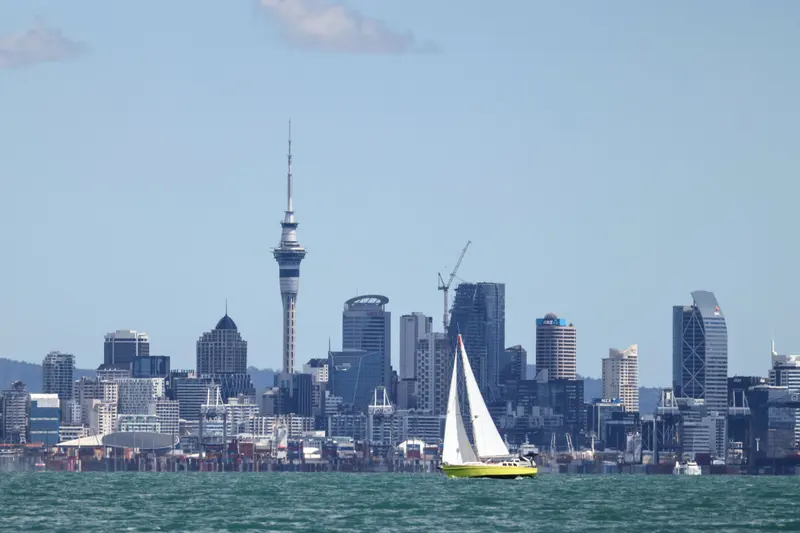
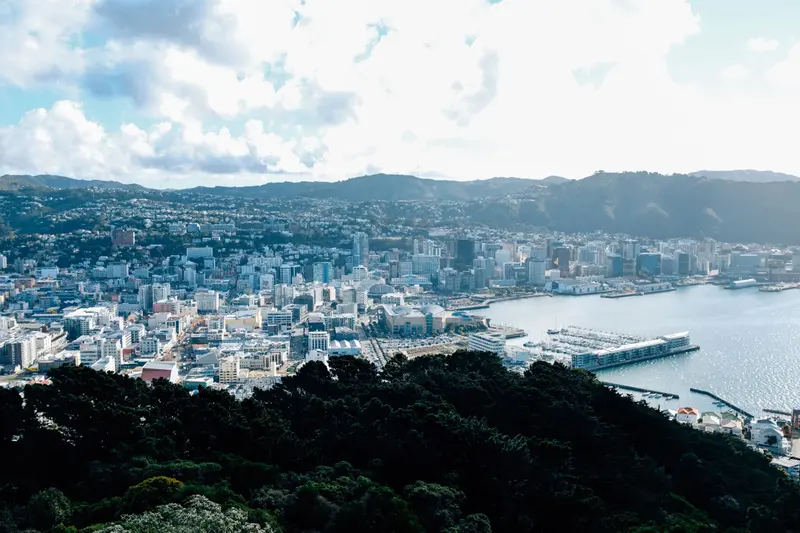
Six o'clock closing and the coffee lounges
From December 1917 New Zealand's hotel bars shut at 18:00, and they kept that hour until 9 October 1967, when closing moved to 22:00 three weeks after a referendum.5 Coffee houses were not bound by the liquor laws. In 1957 the actor Harold Kissin and the Italian-born Memé Churton turned a struggling family jewelry shop on Customs Street West, Auckland, into the Ca d'Oro Coffee Lounge, with an imported espresso machine; it opened from 09:00 to midnight.6
Wellington's Monde Marie opened in 1958. Mary Seddon, a granddaughter of the Liberal premier Richard Seddon, served rum-laced Cona coffee, chilli con carne and folk music, and the police came by regularly hoping to charge her under the licensing laws; the Monde closed in 1970.7 Suzy's Coffee Lounge on Willis Street dates from 1961.8 The architect Fritz Eisenhofer designed its modernist interior in 1964, and Rita Angus painted At Suzy's Coffee Lounge in 1967.9
The flat white, claimed on both sides of the Tasman
Café owners in Australia and New Zealand both claim to have invented the flat white, but the name is older than either claim: a character orders one in an espresso bar in the 1963 British film Danger by My Side, and the coffee historian Ian Bersten thinks the drink probably began in 1950s England.10 In 2015 RNZ introduced Fraser McInnes as the creator of Wellington's version of the drink.8
The New Zealand flat white uses the same shot as the rest of the menu, generally 30 ml, in a smaller cup of about 175 ml, so it tastes stronger than a latte served in a 225 ml vessel.10 Its milk should have a thinner, shinier layer of microfoam than a latte's.10
Roasters, brands and the supermarket jar
Much of the country's coffee passed through one company. Cerebos Gregg's, formed in a 1984 merger, added the Robert Harris coffee brand in 1990 and bought Atomic Coffee Roasters in 2005; Kraft Heinz acquired it in 2018 and folded it into Heinz Watties.2
Independent roasting grew from café counters. Coffee Supreme began in a small Wellington café and, by its 30th anniversary in 2023, ran cafés in New Zealand, Australia and Japan, roasting locally in each market.11 Instant keeps its place at home: in 2023 Consumer NZ ran a blind test of nine supermarket instant coffees, with ten people each making them the way they normally drink them, milk and sugar included.12
Auckland and Wellington: the harbor city and the capital
Auckland's coffee began by the water. The Ca d'Oro, one of the city's first coffee bars, stood near the wharf and drew visiting sailors, and until 1974 it was one of the only late-night places in the city.6 The city's cafés now spread inland across the isthmus suburbs, from Ponsonby and Grey Lynn to Kingsland and Mount Eden, with the roasters among them.
Wellington's coffee began as night life. Mary Seddon threw out the unruly drunks who drifted into the Monde Marie after six o'clock closing emptied the pubs, and Carmen Rupe ran Carmen's International Coffee Lounge in the city.713 The capital's cafés now keep office hours, with Midnight Espresso on Cuba Street, open until 01:00, the late holdout.
Sources
- Tea in New Zealand, Wikipedia, accessed October 2026
- Gregg's (New Zealand), Wikipedia, accessed October 2026
- Giving coffee a shot, RNZ Country Life (April 22, 2022), accessed October 2026
- Brewing up a taste for NZ-grown coffee, RNZ Country Life (June 26, 2026), accessed October 2026
- Six o'clock swill, Wikipedia, accessed October 2026
- Ca d'Oro Coffee Lounge, Wikipedia, accessed October 2026
- Spectrum: The Monde, coffee and counterculture, RNZ (September 12, 2010), accessed October 2026
- NZ retro coffee, RNZ Afternoons (March 30, 2015), accessed October 2026
- Fritz Eisenhofer, Wikipedia, accessed October 2026
- Flat white, Wikipedia, accessed October 2026
- Coffee Supreme marks 30 years: From Wellington cafe to global coffee business, RNZ Nine to Noon (August 28, 2023), accessed October 2026
- New Zealand's instant coffees ranked, from bad to worst, RNZ Checkpoint (October 27, 2023), accessed October 2026
- Carmen Rupe, Wikipedia, accessed October 2026
Cafés in New Zealand: questions
Was the flat white invented in New Zealand or Australia?
Café owners in both New Zealand and Australia claim the flat white, but the name is older than either claim. A character orders one in the 1963 British film Danger by My Side, and coffee historian Ian Bersten thinks the drink probably began in 1950s England. In 2015 RNZ introduced Fraser McInnes as the creator of Wellington's version.
Do New Zealanders drink more coffee or tea?
Coffee, since the 1980s. New Zealand once drank more tea per head than Britain, about 3 to 3.5 kg a person in 1910, but that fell to 0.6 kg by the early 1960s. European refugees, American servicemen, instant coffee in the 1960s and café culture all pushed coffee up.
Is coffee grown in New Zealand?
Only on a small scale, in Northland. In 2022 Rob and Carol Schluter of Ikarus Coffee had 700 Laurina arabica trees in the Pekerau Hills above Doubtless Bay, expected to yield 40 to 50 kg of roasted coffee that season. By 2026 they had doubled the number of trees.
Your café deserves better than a pin someone else dropped
Free listings are free for good. A featured page gives you photos, a menu and your own URL, in your café's own design, for less than a coffee a day.