Cafés in Taiwan Taipei, Kaohsiung and Tainan
Dadaocheng and Yongkang Street in Taipei, Tainan's old-house cafés, Kaohsiung's harbor roasters and Geishas grown around Alishan.
Photo: Jimmy Liao, Pexels License
Taiwan buys almost all of its coffee abroad. Coffee imports were about 8,766 tonnes in 1998, passed 50,000 tonnes in 2020, dipped below that during the 2021 dine-in restrictions and have stayed above it since 2022; in 2023 they cost US$347 million.1 At 12 g of coffee a cup, the Liberty Times worked that out at about 4.24 billion cups a year, roughly 184 per person, against 730 million cups in 1998.1
Home-grown coffee is a small, fast-growing niche. The planted area roughly doubled from about 560 ha in 2017 to about 1,167 ha in 2023, and the crop is worth NT$620 million a year, yet it covers only about 2% of what Taiwan drinks, in a coffee market of about NT$80 billion (US$2.7 billion).2
Taiwan's café cities
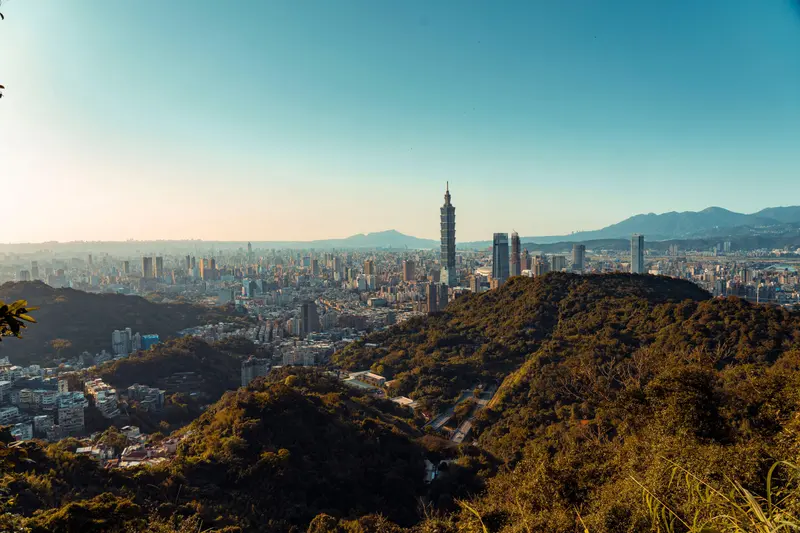
Taipei
Pour-overs off Yongkang Street, 1950s coffee shops on Chengdu Road and tea a few blocks from Dihua Street. 2684 cafés.
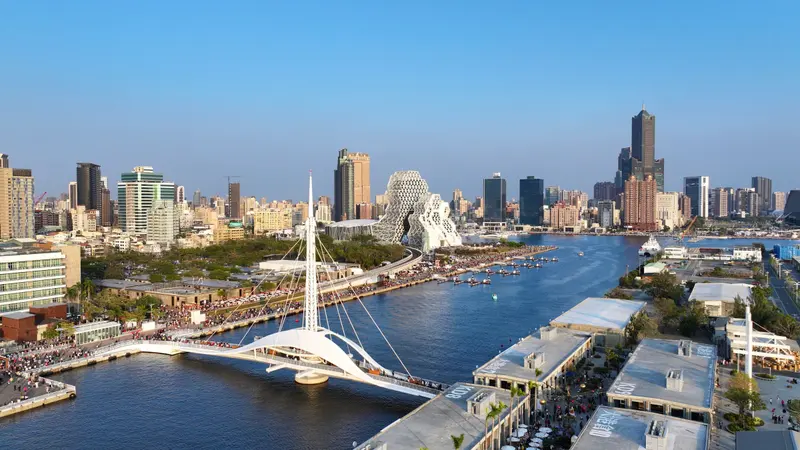
Kaohsiung
Harbor-side cafés by the Pier-2 warehouses, old-house coffee in Yancheng and late cups in Xinxing. 686 cafés.
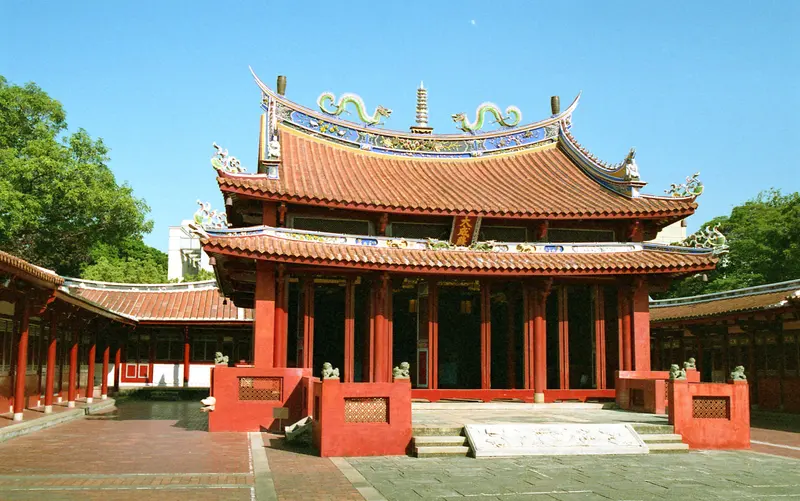
Tainan
Old-house cafés in the alleys of the West Central District, near temples and the Shennong Street lanterns. 764 cafés.
From Hengchun to Mount Hebao
The first documented coffee farming on the island was a venture by the British trading house Tait & Co in 1884, and it did not last.3 In 1902 the Japanese colonial government planted coffee at what is now the Hengchun Tropical Botanical Garden, at the southern tip of the island, which showed that arabica suited Taiwan; seedlings were later raised on Mount Hebao (荷苞山) in Gukeng, Yunlin, and then on Mount Hua.4
After World War II most of the fields ran wild, and in the 1950s the government imported rust-resistant varieties from Hawaii.4 The modern revival began in Huashan (華山), Gukeng, after the 1999 Jiji earthquake and the mudslides that followed, when residents chose coffee as their main industry.5 The first Taiwan Coffee Festival, held in Gukeng in 2003, brought in NT$400 million in its first year, and the second, in 2005, NT$1.5 billion in a month.5
Cafés under Japanese rule
The earliest café on record in Taiwan, Cafe Lion, opened in 1911 beside Taipei New Park, now the 228 Peace Memorial Park.3 By the 1930s more than 400 Western-style establishments were on record across the island, a category that took in coffeehouses, bars and full-service restaurants, and present-day Hengyang Road near Ximending was a hub for Japanese-owned cafés.3 Coffee was a mark of modernity, often brewed in a siphon (虹吸, hóngxī), a glass vacuum brewer.6
Café servers of the period were all women, on fixed salaries rather than tips, and in 1933 a Keelung newspaper ran a contest for the city's most popular café waitress that drew 107 women from 24 cafés.3 Bolero (波麗路), opened in 1934, survives as a steakhouse.3
Chains and champions
Mass-market coffee arrived in stages. King Car Group founded Mr. Brown Coffee (伯朗咖啡) in 1982, Starbucks came in 1998 through a joint venture with Uni-President Enterprises, 85°C Bakery Cafe started in 2004 and Louisa Coffee and Cama Café in 2006.6
Taiwan's baristas have world titles of their own. Berg Wu of Taipei became the first person from Taiwan to win the World Barista Championship, in Dublin on 25 June 2016, and Taiwanese competitors have since won titles at the World Brewers Cup and the World Latte Art Championship.76
Chiayi, Alishan and the Cup of Excellence
Taiwan ran a pilot Cup of Excellence in 2023, labeled Best of Taiwan, and full competitions followed in 2024 and 2025.8910 In 2024 the top lot was a washed Gesha from Mingyang (名陽園) in Chiayi County, grown by Wang Cheng-yuan, which scored 92.25 and sold for US$311.50 a pound; Chiayi supplied 15 of the 20 lots in the results.9
In 2025 the winner was a honey-processed Gesha from Chuang Chia-jung's Chi Tsai Liu Li Mountain Fresh Café, also in Chiayi, at 91.08 points and US$180.40 a pound, and 21 of the 28 winning lots came from Chiayi, the county that includes Alishan.10 Not every winner is a Gesha: Sunlit Taiwan Coffee Farm in Nantou placed second in 2024 and fourth in 2025 with an SL34.910
Taipei, Tainan and Kaohsiung
Taipei has the densest café map in Taiwan: 3.4 coffee shops per square kilometer in 2022, by Ministry of Finance figures, ahead of Tainan at 2 and Taichung at 1.7.1 Its range runs from the 1949 Astoria on Wuchang Street and the old shophouses of Dadaocheng to pour-over bars off Yongkang Street, roasters in the East District and cafés that stay open past midnight.
Tainan, second on that measure, put its cafés into old houses. The renovation wave goes back to 2008, when the heritage foundation 古都保存再生文教基金會 held the first Lǎowū Xīnlì (老屋欣力, "old houses, new life") awards for well-reused buildings; two years later, at the second round, the city had more than 20 new public-space conversions.11 Coffee also grows inside the city's boundaries, in the Dongshan hills, where cafés line Route 175. The city has run a specialty-coffee competition since 2013, followed each year by a Dongshan Coffee Festival around October.12
The southern port of Kaohsiung pairs harbor cafés with farms inside its own boundaries. Its best-known roaster, Jacky Lai of OH! Cafe in Gushan, took the World Coffee Roasting title in 2014 and put his COACHEF beans on commercial sale in February 2015.13 When Typhoon Morakot hit the city in 2009, coffee trees lost in the hills of Maolin, Namasia, Taoyuan, Liugui, Jiaxian, Neimen and Dashu were found again one by one; the farms tending them are mostly small, weeded by hand and sprayed with no chemical fertilizer or pesticide.14
Sources
- 〈財經週報-咖啡商機〉台灣咖啡進口量破5萬噸 年喝40億杯咖啡, Liberty Times (June 2, 2024), accessed October 2026
- Taiwan research institute opens coffee innovation center, Taiwan News (August 11, 2025), accessed October 2026
- A coffee-lover's guide to Taiwanese cafes, Taipei Times (November 9, 2019), accessed October 2026
- The sweet taste of premium coffee: Making the rounds of Taiwan's coffee estates (Taiwan Panorama), Taiwan News (December 26, 2023), accessed October 2026
- 【農村72變系列報導之二十一】咖啡飄香 文學沁人-經典農漁村古坑鄉華山地區, Ministry of Agriculture, Taiwan (2007), accessed October 2026
- Coffee in Taiwan, Wikipedia, accessed October 2026
- World Barista Champion Berg Wu: The Sprudge Interview, Sprudge (July 29, 2016), accessed October 2026
- Taiwan 2023 Pilot: Best of Taiwan, Alliance for Coffee Excellence, accessed October 2026
- Taiwan 2024: Cup of Excellence results, Alliance for Coffee Excellence, accessed October 2026
- Taiwan 2025: Cup of Excellence results, Alliance for Coffee Excellence, accessed October 2026
- 映照鐵窗花的老時光(王怡棻), Global Views Monthly 遠見雜誌 (June 29, 2015), accessed October 2026
- 讓東山咖啡再起!成大教授蔣鎮宇以3項改良技術重塑175咖啡公路產地文化(張語屏), foodNEXT 食力 (August 9, 2022), accessed October 2026
- Coffee Master Yu-chuan Jacky Lai: The Pride of Kaohsiung (咖啡職人賴昱權 高雄之光), Maritime Capital Kaohsiung, Kaohsiung City Government (June 5, 2015), accessed October 2026
- 【Travel 食路小旅行】咖啡串聯的飄香路徑 種好咖.我在行!, 型農大聯盟 e-paper Vol. 42, Kaohsiung City Government Agriculture Bureau (2023), accessed October 2026
Cafés in Taiwan: questions
Does Taiwan grow its own coffee?
Yes, on a small scale. Taiwan had about 1,167 ha of coffee in 2023, double the 2017 area, but local beans cover only about 2% of what the island drinks. Chiayi County, which includes Alishan, dominates the Taiwan Cup of Excellence: it supplied 21 of the 28 winning lots in 2025, and the 2024 winner scored 92.25.
When did coffee come to Taiwan?
The British trading house Tait & Co made the first documented attempt to farm coffee in Taiwan in 1884. The Japanese colonial government planted it at Hengchun in 1902 and later on Mount Hebao in Gukeng, Yunlin. Taiwan's earliest café on record, Cafe Lion, opened in Taipei in 1911, and Bolero followed in 1934.
How much coffee does Taiwan import and drink?
Taiwan has imported more than 50,000 tonnes of coffee a year since 2022, against about 8,766 tonnes in 1998, and the 2023 bill was US$347 million. The Liberty Times estimated that this makes about 4.24 billion cups a year, roughly 184 per person. Taiwan's coffee market is worth about NT$80 billion a year.
Your café deserves better than a pin someone else dropped
Free listings are free for good. A featured page gives you photos, a menu and your own URL, in your café's own design, for less than a coffee a day.