
Cafés in India Bengaluru and Mumbai
Filter kaapi in a steel tumbler, Bengaluru's darshinis and roasters, Mumbai's Irani cafés and coffee houses, and beans from the Western Ghats.
Photo: Satheesh Sankaran, Pexels License
India grows coffee mostly to sell abroad. The Coffee Board puts output at about 3.6 lakh (360,000) tonnes a year, seventh in the world and about 3.5% of global production, and says nearly 70% is exported, to 128 countries.1 In calendar 2025 exports fell 4.47% to 384,000 tonnes but rose 22.5% in value to US$2.06 billion; Italy, Russia and Germany bought the most.2
Robusta is most of the crop. For 2023/24 the Board counted 360,500 tonnes, 71.8% of it robusta, with Karnataka growing 70.6%, Kerala 20.5% and Tamil Nadu 5.4%.3 The USDA estimates 6.43 million 60-kg bags (about 386,000 t) for 2025/26 and forecasts 6.14 million for 2026/27.4
Home consumption is small next to the harvest. A study for the Board by CRISIL estimated it at 91,000 tonnes in 2023 and 96,000 tonnes in 2024.3
Seven seeds from Mocha and the British estates
Indian coffee starts with a legend. In the Coffee Board's telling, the Sufi saint Baba Budan planted seven seeds of Mocha coffee around 1600 in the courtyard of his hermitage in the Baba Budan Giri hills of Chikkamagaluru, Karnataka, where for a long time they stayed a बागान कौतूहल (garden curiosity).51
Coffee was already drunk in Mughal India: accounts from the early 1600s describe qahwakhanas (coffeehouses) in Shahjahanabad, today's Old Delhi.6 Commercial planting came with the British, and the East India Company set up plantations in Coorg, now Kodagu, in the late 1700s.6
The state stepped in during the Second World War, when prices had collapsed and pests and disease ravaged the estates. The Coffee Act VII of 1942 created the Coffee Board, and growers pooled their crop through it until marketing was deregulated in 1996.7
Shade-grown in the Western Ghats
Indian coffee covers 4.91 lakh hectares in the Western and Eastern Ghats and the Northeast, grown under a two-tier canopy of evergreen and leguminous trees and often interplanted with pepper, cardamom and vanilla.1 Arabica grows in the cooler highlands and robusta in the warmer, humid zones.1 Smallholders own nearly 99% of holdings and grow 70% of the crop.1
Five regional coffees carry Geographical Indication tags, the legal protection of a named origin: Coorg Arabica, Wayanad Robusta, Chikmagalur Arabica, Araku Valley Arabica and Bababudangiris Arabica. A sixth tag covers Monsooned Malabar Robusta, a specialty coffee whose "monsooning" on India's west coast gives a mellow, low-acid cup.1
Filter kaapi and the steel tumbler
In the south the everyday cup is filter kaapi. Dark-roasted coffee, traditionally washed arabica (Plantation A) or peaberry, is ground with 10–20% chicory and brewed slowly in a two-part stainless-steel filter, then mixed with hot milk.6 It comes in a steel tumbler set in a dabarah, a small bowl, and is poured between the two to cool it and raise a froth.68 Jaggery or honey sweetened it until white sugar took over in the mid-1900s.6
Instant coffee is the other big market. India is a hub for producing and exporting it: value-added coffees make up nearly 38% of exports, and instant coffee shipments rose 11.56% to 46,954 tonnes in 2025.12 A cut in GST on instant coffee and coffee extracts from 18% to 5% was expected, in a November 2025 government brief, to lower retail prices by 11–12%.1
The Indian Coffee House and the darshini
The Indian Coffee House began as the India Coffee House, opened by the Coffee Cess Committee at Churchgate, Bombay, in 1936; by the 1940s there were nearly 50 across British India.9 When the Coffee Board decided to close them in the mid-1950s, workers backed by the communist leader A. K. Gopalan took them over as cooperatives. The first was formed in Bangalore on August 19, 1957, and 13 cooperatives now run nearly 400 coffee houses.9
Bengaluru added its own format. In 1983 the hotelier R. Prabhakar's Cafe Darshini opened in Jayanagar, generally credited as the first darshini: a strictly vegetarian, self-service restaurant where customers eat idli, dosa and vada at tall steel counters, standing up, with filter coffee in a tumbler.8 By the 2010s the city had an estimated several thousand.8
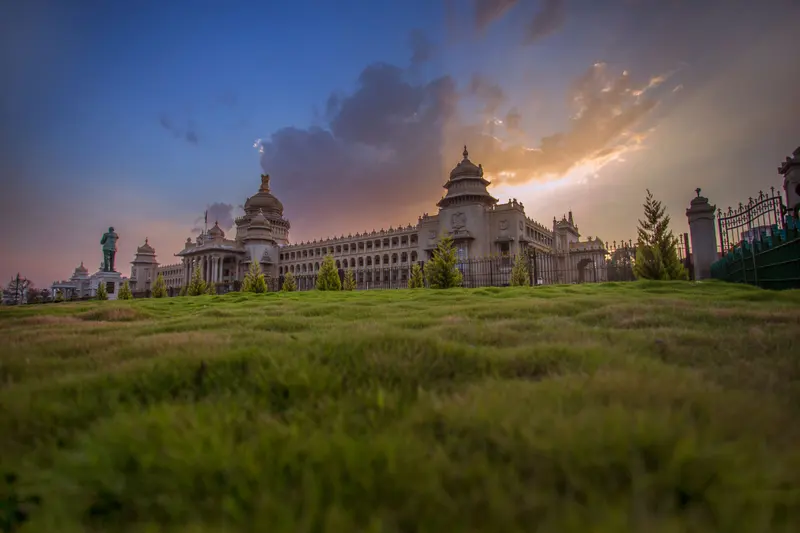
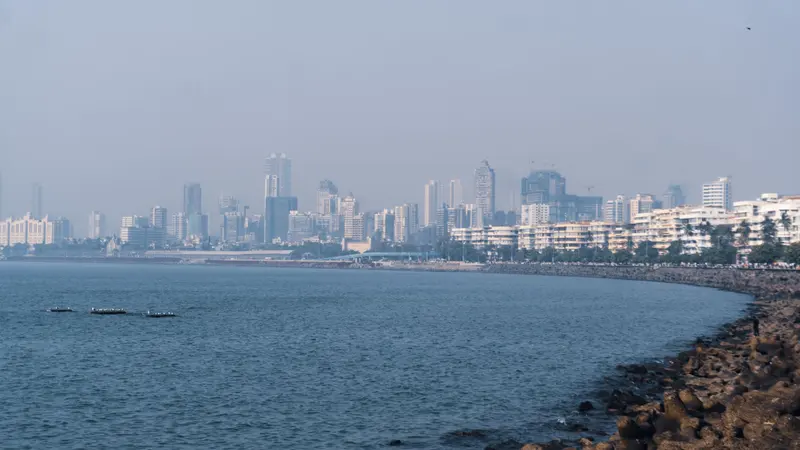
Bengaluru and Mumbai
Bengaluru's best-known chain has estate roots. Café Coffee Day, founded by V. G. Siddhartha, opened its first café on Brigade Road on July 11, 1996; the company grows coffee on 20,000 acres of its own estates in Chikkamagaluru, and the chain had 423 cafés in September 2025.10 Third Wave Coffee Roasters opened its first café in Koramangala in 2016 and roasts beans bought from Indian estates.11 The MG Road Indian Coffee House closed in April 2009 and reopened on Church Street, under 100 m away.9
The darshini cup is cheap, but less so than it was. In April 2025 Bengaluru hotels raised filter coffee and tea by ₹3–5 a cup, after a commonly used arabica powder rose from ₹580 to ₹730 a kilo in under three months.12
Mumbai's oldest café institution pours tea. Irani cafés were opened by migrants from Yazd and Kerman in central Iran, who kept arriving until 1947; many stand on street corners, plots that Indian businessmen considered inauspicious and sold cheaply, and regulars dip bun maska, a buttered bun, into Irani chai.13
Coffee chains came later. Starbucks entered India in Mumbai on October 19, 2012, with a 120-seat flagship in the Elphinstone Building at Horniman Circle; a 12-ounce cappuccino cost a little over US$2, at a time when Café Coffee Day led the market with about 1,350 outlets.14
Sources
- Brewing Prosperity: India's Coffee Story from Farm to Global Fame, Press Information Bureau, Government of India (November 2025), accessed October 2026
- India's Coffee Export Volumes Dip in 2025, Value Jumps Over 22%, India Seatrade News (January 23, 2026), accessed October 2026
- Database on Coffee (July 2024), Coffee Board of India, accessed October 2026
- Coffee: World Markets and Trade (July 2026), USDA Foreign Agricultural Service, accessed October 2026
- कॉफी बोर्ड (Hindi home page), Coffee Board of India, accessed October 2026
- Indian filter coffee, Wikipedia, accessed October 2026
- About Us, Coffee Board of India, accessed October 2026
- Darshini (restaurant), Wikipedia, accessed October 2026
- Indian Coffee House, Wikipedia, accessed October 2026
- Café Coffee Day, Wikipedia, accessed October 2026
- All perked up: How Third Wave Coffee Roasters created a micro-community of coffee lovers in Bengaluru, YourStory (August 17, 2019), accessed October 2026
- Bengaluru's filter coffee and tea prices rise as costs soar, News Karnataka (April 14, 2025), accessed October 2026
- Maska Bun and Migration: Irani Cafés of Bombay (Aakriti Chandervanshi), Sahapedia, accessed October 2026
- Starbucks opens first India store in Mumbai (Erika Kinetz, Associated Press, October 19, 2012), KOMO News, accessed October 2026
Cafés in India: questions
Where is coffee grown in India?
In 2023/24 Karnataka grew 70.6% of India's coffee, Kerala 20.5% and Tamil Nadu 5.4%. Coffee covers 4.91 lakh hectares in the Western and Eastern Ghats and the Northeast, under shade trees. Coorg, Chikmagalur, Bababudangiris, Wayanad and Araku Valley coffees carry Geographical Indication tags, and smallholders grow 70% of the crop.
What is filter kaapi, India's South Indian filter coffee?
Filter kaapi is dark-roasted coffee, traditionally washed arabica or peaberry, ground with 10–20% chicory and brewed slowly in a two-part stainless-steel filter, then mixed with hot milk. In India it is served in a steel tumbler set in a dabarah and poured between the two to cool it and raise a froth. Jaggery or honey was the sweetener before white sugar.
How much of India's coffee is exported?
The Coffee Board says nearly 70% of India's roughly 360,000-tonne crop is exported, to 128 countries. In 2025 exports were 384,000 tonnes worth US$2.06 billion, with Italy, Russia and Germany the biggest buyers. Domestic consumption was estimated at 96,000 tonnes in 2024.
Your café deserves better than a pin someone else dropped
Free listings are free for good. A featured page gives you photos, a menu and your own URL, in your café's own design, for less than a coffee a day.