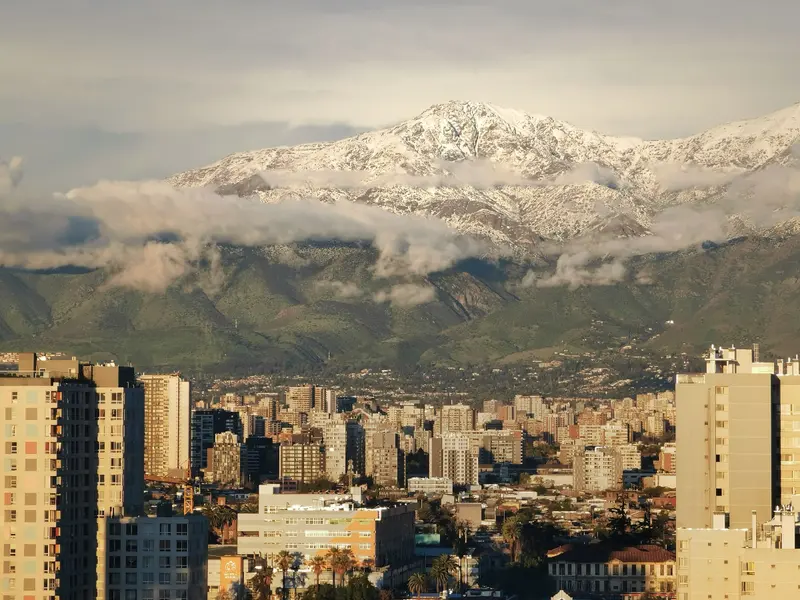
Cafés in Chile Santiago
Roasters in Santiago's Lastarria, Providencia and Barrio Italia, award-winning bars in Patagonia, plus once, tea and instant coffee.
Photo: Marcelo Rodrigo, Pexels License
Chile grows no coffee for sale, so its roasters work entirely with imported beans.3 Wild coffee plants do survive in the highlands of Rapa Nui (Easter Island), believed to have been brought by colonists centuries ago, but in 2017 the group studying them found too few for commercial use.1 That group, led by the Chilean importer and roaster Bee Coffee Shop with AgroWine Lab and the Latin American Alliance of Specialty Coffee, planned a genetic study of the wild varieties.1
For decades the imports came mostly as powder. Over the decade to 2020, Chileans drank an average of 0.75 kg of coffee per person a year by International Coffee Organization figures, and soluble coffee made up 98% of coffee sales.2 The market is growing: Euromonitor measured a 175% rise in consumption between 2011 and 2018,2 and in a 2026 Corpa study 77% of Chileans drank coffee at least once a week, on 4.8 days on average, at about two cups a day.5
Chile's café cities
Tea first, and coffee from a jar
Tea is still the everyday infusion: 90% of Chilean households say they drink it regularly, Chile leads Latin America in tea consumption, and it ranks among the world's top five per head.4 Coffee is mostly a home drink too: 89% of coffee drinkers have it at home, against 38% at work.6 Freeze-dried instant and whole beans each reached 28% of drinkers in a 2025 Corpa survey, and capsules 16% in upper-income homes against 6% in lower-income ones.6
Among origins, Colombia is the favorite, named by 68%, ahead of Brazil and Italy.6 Sugar depends on age: among young adults, 64% sweeten their coffee, against 37% of Chileans over 46.5
The once and the downtown counter
Tea and coffee meet at the once, the early-evening meal of bread, something sweet and a hot drink, usually eaten between 17:00 and 19:00. The best-known theory says once (eleven) was code for aguardiente, an eleven-letter word; another credits English settlers in Valparaíso with bringing the afternoon tea habit, and what goes on the table changes with region, income and age.7
Central Santiago also kept the café con piernas, a stand-up coffee bar staffed by waitresses in short dresses, a format that dates from 1982. In the 2000s successive mayors of the comuna (municipality) of Santiago restricted these businesses, and the few that remain now open only in the daytime.8
Starbucks, roasters and the specialty boom
The chains came first. Starbucks opened its first Chilean store on 22 August 2003, on Avenida Isidora Goyenechea in Santiago, through a joint venture with the local food-service company Grain Red.9 In 2026 the general manager of Juan Valdez Chile put the growth of whole-bean and gourmet coffee at about 10% a year.10
Filter coffee has found an audience. Carlos Medina, head barista at Elephant Coffee, became Chile's barista champion in 2020; by then his café had gone from one or two filter coffees a day to as many as 15.2 Cafés have adjusted to their customers in other ways: in an Expocafé survey, 61% of coffee shops used lactose-free milk and 42% offered plant-based milk.2
The best-known bars are not all in the capital. Three Chilean cafés made The World's 100 Best Coffee Shops for 2026, all in the south: Holaste! in Puerto Natales at 21st, Eco Mapu Coffee in Villarrica at 59th and Wake Up Coffee Lab in Punta Arenas at 74th.11
Santiago
The capital still holds most of the country's specialty trade: in 2021 Perfect Daily Grind put over 50% of the country's specialty cafés in Santiago, and 62% in just three of Chile's regions.2 Roasters keep bars in Providencia, Lastarria and Barrio Italia, pastelerías (pastry shops) serve the once around Plaza Ñuñoa, and the stand-up counters remain on the pedestrian streets of Santiago Centro.
Sources
- How Specialty-Grade Coffee From Chile Could Become a Real Thing, Daily Coffee News (March 15, 2017), accessed October 2026
- Café de especialidad en Chile: creciendo contra las probabilidades, Perfect Daily Grind Español (January 7, 2021), accessed October 2026
- El rol de los microtostadores en los países no productores de América latina, Perfect Daily Grind Español (August 31, 2022), accessed October 2026
- Chile lidera el consumo de té en Latinoamérica, El Mostrador, Revista Jengibre (May 21, 2025), accessed October 2026
- ¿Cómo toman café los chilenos? Radiografía revela cambios en los hábitos de consumo, Radio Agricultura (July 21, 2026, citing CORPA's Atlas Category del Café), accessed October 2026
- Primer estudio sobre la industria del café en Chile: mayoría opta por el instantáneo en polvo, El Mostrador, Revista Jengibre (May 27, 2025), accessed October 2026
- "La once", la merienda chilena que surgió como excusa para beber aguardiente, The Clinic, with EFE (June 26, 2019), accessed October 2026
- Resaca de los años 80: diario inglés analiza los cafés con piernas de Chile, The Clinic (April 13, 2023), accessed October 2026
- Starbucks Café instala su primer local en Chile, Emol (August 21, 2003), accessed October 2026
- El rito de la dosis justa: las cápsulas de café son la puerta de entrada al consumidor premium, Forbes Chile (August 7, 2026), accessed October 2026
- Chile hace historia: tres cafeterías entre las 100 mejores del mundo en 2026, Meteored Chile (February 19, 2026), accessed October 2026
Cafés in Chile: questions
Is coffee grown in Chile?
Not commercially. Chile's roasters work with imported beans, and Colombia is the favorite origin among Chilean coffee drinkers, ahead of Brazil and Italy. Wild coffee plants survive in the highlands of Rapa Nui (Easter Island), but in 2017 the group studying them found too few for commercial use.
Is tea or coffee more popular in Chile?
Tea. In Chile 90% of households say they drink tea regularly, and the country leads Latin America in tea consumption. Coffee is growing: consumption rose 175% between 2011 and 2018, and in 2026 about 77% of Chileans drank coffee at least once a week, at around two cups a day, much of it instant.
Which cafés in Chile are on The World's 100 Best Coffee Shops list?
Three Chilean cafés made The World's 100 Best Coffee Shops for 2026, all in the south of Chile: Holaste! in Puerto Natales, ranked 21st, Eco Mapu Coffee in Villarrica, ranked 59th, and Wake Up Coffee Lab in Punta Arenas, ranked 74th.
Your café deserves better than a pin someone else dropped
Free listings are free for good. A featured page gives you photos, a menu and your own URL, in your café's own design, for less than a coffee a day.