
Cafés in Poland Warsaw and Kraków
Kraków's first café of the 1770s, the Green Balloon cabaret, Warsaw's Skamander table, plujka and Inka, and the roasters of Warsaw.
Photo: Sergey Guk, Pexels License
Poland buys a lot of coffee and drinks less of it per head than most of Europe. In 2021 it imported 128,000 tonnes of green coffee, ninth in Europe and the most in Eastern Europe, about 68% of it by way of Germany.1 Much of it leaves again roasted: Poland exported 64,000 tonnes of roasted coffee that year, the fifth-largest volume in Europe, with Ukraine and Germany the largest buyers.1
More than 80% of Polish adults drink coffee every day, but estimates of the yearly amount run from 0.7 kg to 2.5 kg per person, below a European average of about 5 kg. Instant coffee holds the largest share of the market, and specialty coffee less than 2% of it.1 Consumption is rising: in 2017 Rzeczpospolita reported that intake per adult had grown by 80% in recent years, to about 3 kg of beans.2
Kulczycki and the first Kraków café
Poland's coffee legend begins at the siege of Vienna in 1683. Jerzy Franciszek Kulczycki, a Polish nobleman and merchant, slipped out of the city in Turkish dress and came back with word that relief was near. He is often credited with opening Vienna's first café with beans the Ottoman army left behind.3 Historians doubt it: the coffee stories were written by Gottfried Uhlich in 1783, and recent sources give Vienna's first coffeehouse to the Armenian Johannes Diodato in 1685.3
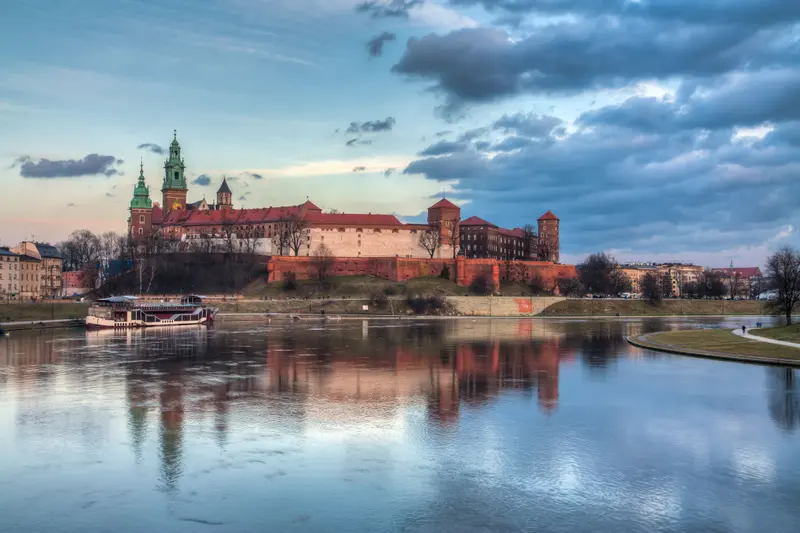
Kraków's first café opened in the early 1770s, on the first floor of the Tenczerowska house at Rynek Główny 31, on the corner of Szewska. Its owner, Marianna Sędrakowska, served the guests herself and charged 3 grosze a cup for strong coffee po polsku (Polish-style) under a thick layer of foam.4
Kraków's Rynek and the Green Balloon
By the late 19th century, cafés lined the Rynek and the streets off it. Józef Kijak's, at Rynek Główny 44, was among the most exclusive from 1885 to 1914.4 Noworolski, on the east side of the Sukiennice (the Cloth Hall), opened in 1912 where a confectionery had stood since 1880. The Noworolski family got it back in 1992.5
Jan Apolinary Michalik, a confectioner from Lwów, opened his Cukiernia Lwowska at Floriańska 45 in 1895; it is known as Jama Michalika (Michalik's Den).6 On 7 October 1905, Kraków poets, writers and painters started the Zielony Balonik (Green Balloon) cabaret there, which ran until 1912.7 For the 1910 expansion, Karol Frycz drew up the interior and Franciszek Mączyński the building work.6
Warsaw's literary tables
Mała Ziemiańska opened on 14 April 1918 at Mazowiecka 12. The Skamander poets Julian Tuwim, Antoni Słonimski, Jan Lechoń and Kazimierz Wierzyński had a reserved table on the half-landing, which regulars called the górka (little hill).8 The building burned in the Warsaw Uprising of 1944 and was pulled down in 1946.8 On Nowy Świat, Antoni Kazimierz Blikle bought a cukiernia (confectionery) in 1869. The Uprising destroyed that building too, and Jerzy Blikle restarted production in 1948.9
Under communism, writers kept meeting over coffee. The buffet of the PIW publishing house at Foksal 17, nicknamed Café Snob, had four tables. The Letter of 34, sent by intellectuals to the party leader Władysław Gomułka in 1964, was written there, and after March 1968 the authorities closed the café and had it walled up.10 At the Czytelnik café on Wiejska, the novelist Tadeusz Konwicki had his own table.10
Plujka, Inka and the instant years
In the Polish People's Republic coffee counted as a luxury, partly for its link with artists and intellectuals, and it was often missing from the shops, so people drank grain substitutes.2 The best known is Inka, developed in the late 1960s and made in Skawina since 1971 from rye, barley, chicory and sugar beet. It has no caffeine.11
Real coffee was often brewed po turecku (Turkish-style), which in Poland meant grounds steeped straight in a glass. People called it plujka (the spitter), because the grounds had to be spat out.10 The name has little to do with how coffee is made in Turkey.2 After 1989 Poles switched to instant in large numbers; cafés stayed rare even in big cities through the 1990s, and McDonald's opened its first McCafé in Poland in 2008.2
Warsaw and Kraków today
Warsaw's specialty coffee began with its roasters. Java Coffee started roasting on a Probat drum in 2001, and Filtry Café, in the old part of Ochota, was the first in the city to brew by methods other than espresso.12 Poland's best-known barista started behind a chain counter at Poznań's main railway station: in 2018 Agnieszka Rojewska became the first Pole and the first woman to win the World Barista Championship.13
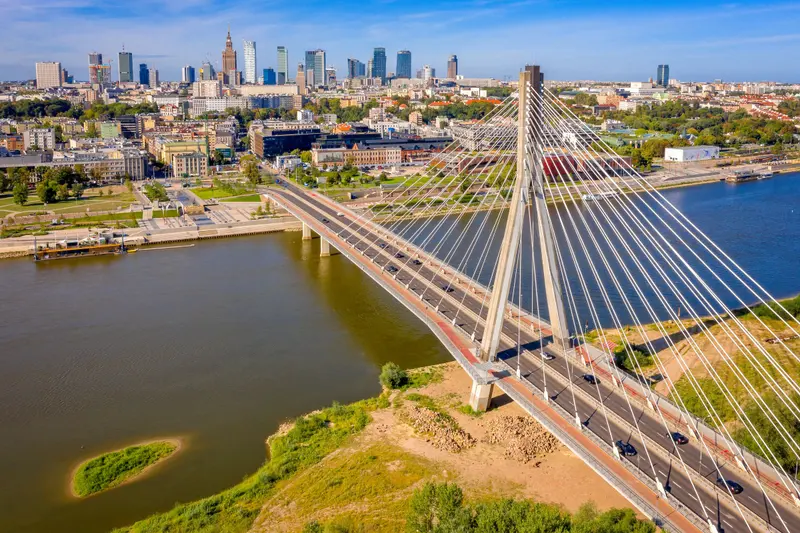
Kraków's café map still starts where its first cafés stood, on the Rynek and Floriańska.46 Warsaw's specialty pioneers settled away from the old literary streets of Nowy Świat and Foksal, in Ochota and at the former Soho Factory, where the roaster Kofi Brand began roasting on a Giesen in 2011.12 Prices sit close to Western Europe's: in October 2023 a cappuccino in central Warsaw cost 14.50 zł and a small espresso 10 zł.14
Sources
- The European market potential for coffee in Poland (last updated 15 August 2022), CBI, Netherlands Ministry of Foreign Affairs, accessed October 2026
- Jak kawa stała się dla Polaków symbolem statusu (Piotr Mazurkiewicz, 30 November 2017), Rzeczpospolita, accessed October 2026
- Jerzy Franciszek Kulczycki, Wikipedia, accessed October 2026
- Pierwsza w Krakowie kawiarnia (17 December 2013), Magiczny Kraków, City of Kraków, accessed October 2026
- Noworolski, Wikipedia (Polish), accessed October 2026
- Jama Michalika, Wikipedia (Polish), accessed October 2026
- Zielony Balonik, Wikipedia (Polish), accessed October 2026
- Mała Ziemiańska, Wikipedia (Polish), accessed October 2026
- Najstarsza cukiernia w Warszawie słynie ze znakomitych pączków (Igor Szulim, 26 February 2025), National Geographic Polska, accessed October 2026
- Krem sułtański i kawa z fusami. Jak kawiarnie ratowały od szarości PRL-u? (Adrianna Ewa Stawska-Ostaszewska, 9 September 2025), Super Biznes, Super Express, accessed October 2026
- Inka (drink), Wikipedia, accessed October 2026
- A Guide to Great Coffee in Warsaw, Poland (23 July 2015), Daily Coffee News, accessed October 2026
- World Barista Champion Agnieszka Rojewska on Customer Service and Competition (5 July 2018), Daily Coffee News, accessed October 2026
- How do coffee prices in Tallinn cafés compare to those in other big cities? (Veronika Uibo, 23 October 2023), ERR News, accessed October 2026
Cafés in Poland: questions
What is plujka coffee in Poland?
Plujka is the nickname for coffee brewed po turecku (Turkish-style) in the Polish People's Republic: ground coffee steeped straight in a glass. The name means roughly the spitter, because drinkers had to spit out the grounds. It has little to do with how coffee is made in Turkey. Grain substitutes such as Inka, made in Skawina since 1971, filled in when real coffee was missing.
Where was the first café in Kraków, Poland?
Kraków's first café opened in the early 1770s on the first floor of the Tenczerowska house at Rynek Główny 31, on the corner of Szewska. Marianna Sędrakowska ran it and charged 3 grosze a cup. Later came Noworolski in the Sukiennice in 1912 and Michalik's confectionery on Floriańska in 1895, where the Green Balloon cabaret began in 1905.
How much coffee does Poland import and drink?
Poland imported 128,000 tonnes of green coffee in 2021, ninth in Europe and the most in Eastern Europe, and exported 64,000 tonnes of roasted coffee. More than 80% of adults drink coffee daily, with estimates of 0.7 kg to 2.5 kg per person a year, below the European average of about 5 kg. Instant coffee holds the largest share.
Your café deserves better than a pin someone else dropped
Free listings are free for good. A featured page gives you photos, a menu and your own URL, in your café's own design, for less than a coffee a day.