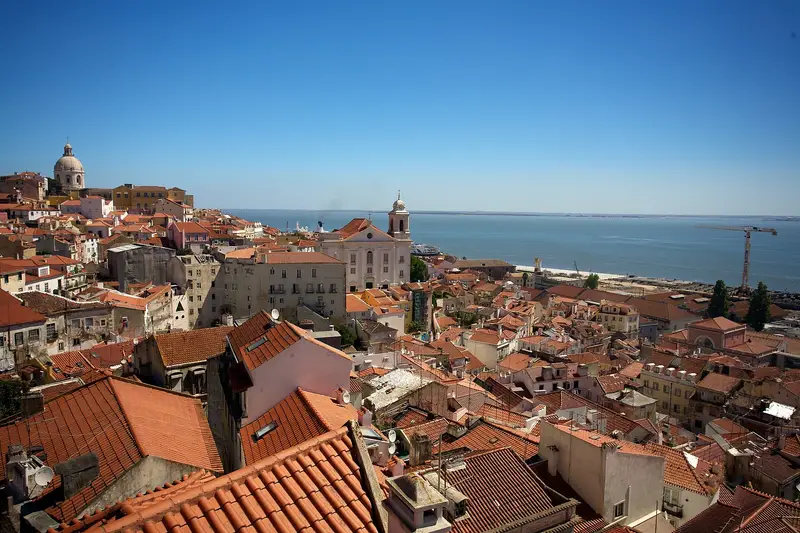
Cafés in Portugal Lisbon and Porto
Lisbon's pastelarias and A Brasileira, Porto's Majestic and the cimbalino, plus the bica, Delta and the price of a café.
Photo: dirk.olbertz, CC BY 2.0
Coffee is Portugal's national drink, and every bean of it is imported.1 The country drinks it short: an espresso uses about 7 g of coffee against roughly 27 g for a cup of filter, one reason Portugal sits near the bottom of the world's top 20 consumers by weight. The industry association AICC put consumption at 5.5 kg per person in 2017, up from 4.73 kg in 2012 and counting what tourists drink, against about 12 kg in Finland.2
Ask for um café anywhere and you get an espresso. In Lisbon it is also uma bica; in Porto and the north, um cimbalino.3
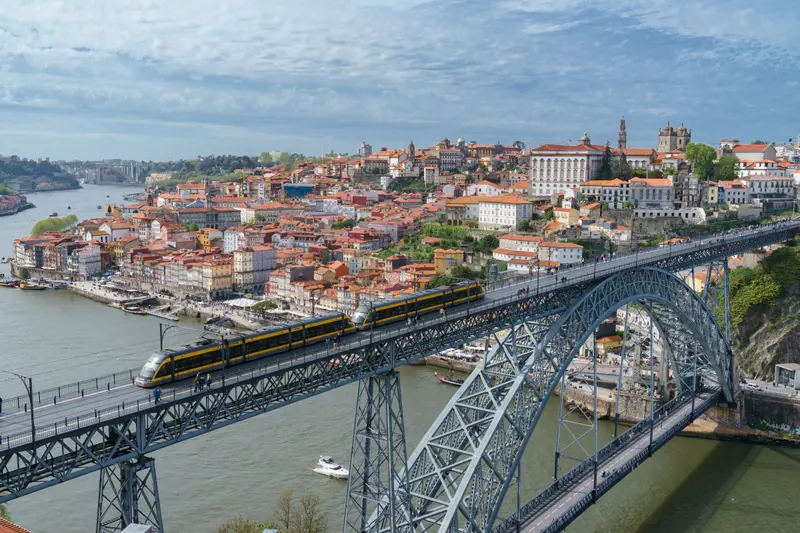

From Brazil to Timor: how coffee reached Portugal
Portuguese coffee history runs through the empire. In 1727 Francisco de Melo Palheta planted Brazil's first coffee bush in Pará, reputedly from seeds smuggled out of French Guiana; by the 1840s Brazil grew about 40% of the world's coffee.5 Today Portugal's beans come mainly from Vietnam, mostly robusta, from Brazil and from Uganda, according to the AICC.2
In Africa, coffee was Angola's leading export under colonial rule, grown on about 2,500 commercial farms and by 250,000 smallholders. After owners and workers left the estates in 1975–76, exports fell to 8% of their 1973 level by 1985.6
In Timor, the Portuguese introduced coffee in the early 1800s. The Híbrido de Timor, an unplanned cross of arabica and robusta, is grown there, and coffee made up 24% of Timor-Leste's exports in 2017.7
Delta, Nicola and Sical
Three names cover most Portuguese counters. Delta Cafés began in 1961 in a 50 m² warehouse in Campo Maior, in the Alentejo, where Rui Nabeiro started with three workers. It became market leader in 1994 with 42% and held 38% in the 2000s, and launched its Delta Q capsules in 2007.8
Nicola traces its coffee to 1779 and to Lisbon's Café Nicola, a meeting place for writers and the poet Bocage; it has had its own factory in Venda Nova since 1950 and belongs to Massimo Zanetti Beverage Ibéria, formed in 2017.9 Sical was founded in Porto in 1947 by Vicente Peres, became the first Portuguese coffee brand to advertise in 1956, and has belonged to Nestlé since 1987.10
The pastelaria and the old café
The everyday setting is the pastelaria, a pastry shop that is also a café, and the oldest are still open. Confeitaria Nacional on Lisbon's Praça da Figueira has traded since 1829.11 Porto's Café Progresso opened in 1899 and was among the first in the city with a Cimbali espresso machine, the Italian brand behind the word cimbalino.4
The counter has long been cheap. In 2018 the AICC said a café had cost about 60–70 cents for several years because roasters absorbed rising bean prices.2 That ended with the bean-price records of 2024 and 2025:1 in December 2024, Expresso reported that cafés planned to charge €0.90–0.95 from January 2025.12
Lisbon and Porto: bica and cimbalino
Lisbon's literary café is in Chiado. A Brasileira opened at Rua Garrett 120/122 on 19 November 1905, created by Adriano Telles, a former emigrant to Brazil.13 It has been classified a property of public interest since 1997, and Lagoa Henriques's bronze of Fernando Pessoa, unveiled in the 1980s, sits at one of its terrace tables.13 Down the hill on Praça da Figueira, the founder's son brought the bolo-rei recipe from France to Confeitaria Nacional in 1875, and the house still supplies the Presidency of the Republic.11
Porto's counterpart is on Rua de Santa Catarina, now a pedestrian shopping street. Café Majestic opened there on 17 December 1921, with Art Nouveau decoration by the architect João Queiroz.14 By 2017 the Majestic and Café Guarany had both joined Porto de Tradição, the city program that protects historic shops.4
Café Progresso, on Rua Actor João Guedes, changed hands in 2017. Its new owners served an espresso of 60% Brazilian and 40% Guatemalan beans for €0.80 that year, alongside coffees from Ethiopia, Peru and Costa Rica.4 At any of the three, as anywhere in the north, an espresso is um cimbalino.3
Sources
- Portugal's national beverage about to become more expensive, Essential Business (February 7, 2025), accessed October 2026
- Exportações e consumo interno de café crescem em Portugal em 2018, Correio da Manhã / Lusa (September 30, 2018), accessed October 2026
- Como pedir café em Portugal, DN Brasil (August 24, 2024), accessed October 2026
- O café de qualidade fez nascer o Progresso. Hoje fá-lo mudar, Observador (October 12, 2017), accessed October 2026
- Coffee production in Brazil, Wikipedia, accessed October 2026
- Agriculture in Angola, Wikipedia, accessed October 2026
- Coffee industry of Timor-Leste, Wikipedia, accessed October 2026
- Delta Cafés, Wikipedia, accessed October 2026
- Sobre nós, Nicola Café, accessed October 2026
- SICAL: 75 anos sempre a inovar no mundo do café, Echo Boomer (July 11, 2022), accessed October 2026
- A slice of Lisbon's history (About us), Confeitaria Nacional, accessed October 2026
- Preço do café vai subir já no próximo mês: saiba quanto vai custar uma bica, Postal do Algarve (December 6, 2024, citing Expresso and ProVar), accessed October 2026
- A Brasileira do Chiado (est. 1905), Historic Cafés Route, accessed October 2026
- Café Majestic (est. 1921), Historic Cafés Route (April 2022), accessed October 2026
Guides
Espresso drinks from ristretto to café bombón
What each espresso drink really is: ristretto and lungo, americano vs long black, three macchiatos, cortado, gibraltar, piccolo, flat white and bombón.
How to orderCafé etiquette around the world
Tipping in cafés from Tokyo to Lima, counter and table prices in Italy and Lisbon, paying at the till, Vietnam's free trà đá and indoor smoking rules.
Coffee culturesThe Portuguese bica and how to order it
How to order coffee in Portugal: bica vs cimbalino, galão, meia de leite, pingado, abatanado, counter vs terrace prices, pastel de nata and the old cafés.
Cafés in Portugal: questions
What is an espresso called in Portugal?
In Portugal, um café means an espresso everywhere. Lisbon also calls it uma bica, and Porto and the north call it um cimbalino, after the Italian Cimbali espresso machine. Porto's Café Progresso, opened in 1899, was among the first cafés in the city to have one, and Portuguese espresso uses only about 7 g of coffee.
Which are the biggest coffee brands in Portugal?
Delta Cafés, founded in 1961 in Campo Maior by Rui Nabeiro, became market leader in 1994 with a 42% share and held 38% in the 2000s. Nicola, which traces its coffee to 1779 and Lisbon's Café Nicola, belongs to Massimo Zanetti Beverage Ibéria. Sical, founded in Porto in 1947, has been owned by Nestlé since 1987.
How much coffee do people drink in Portugal?
According to the industry association AICC, Portugal consumed 5.5 kg of coffee per person in 2017, up from 4.73 kg in 2012, with tourists' consumption counted as domestic. That places Portugal near the bottom of the world's top 20, behind Finland at about 12 kg, partly because an espresso uses about 7 g of coffee against 27 g for filter.
Your café deserves better than a pin someone else dropped
Free listings are free for good. A featured page gives you photos, a menu and your own URL, in your café's own design, for less than a coffee a day.