Cafés in Thailand from Chiang Rai to Phuket
Oliang at Thai-Chinese shops, hill arabica in Chiang Rai and Chiang Mai, Bangkok's specialty bars and kopitiams in Phuket Town.
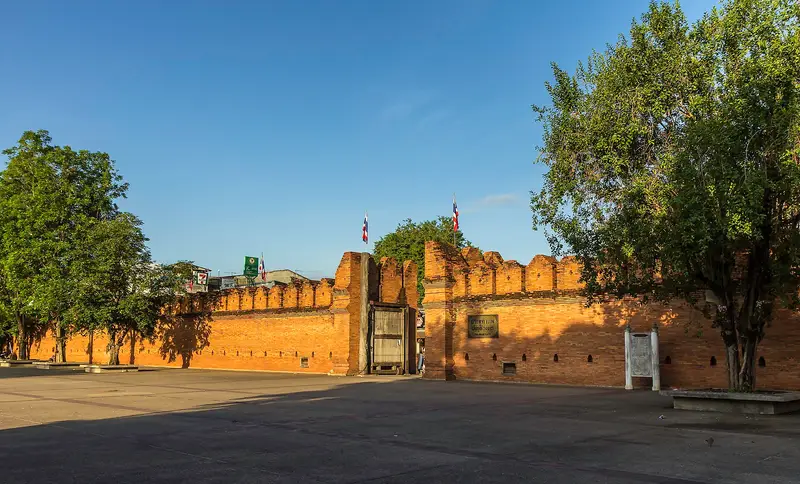
Photo: Stefan Fussan, CC BY-SA 3.0

Thailand grows two coffees in two climates. Arabica comes from the northern hills of Chiang Rai, Chiang Mai and Mae Hong Son, and robusta from the humid south, where Chumphon is the main province.13 It is a small producer by world standards, 19th by USDA's 2023 ranking, and it now drinks more coffee than it grows.1
What it does have is a café culture that has grown fast, from oliang poured at old Thai-Chinese coffee shops to petrol-station chains and specialty roasters. Chiang Rai and Chiang Mai grow most of the arabica,1 Bangkok is where Café Amazon opened its first branch,8 and Phuket Town still keeps its kopitiams.15
Thailand's café cities
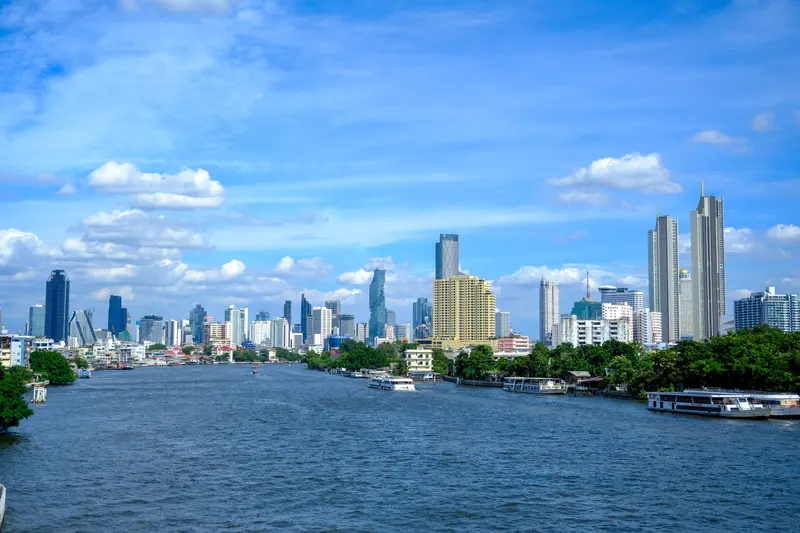
Bangkok
Oliang over ice and specialty bars from Ari to Thonglor. 3364 cafés.
Chiang Mai
Northern Thai arabica from the surrounding hills, roasted in town. 1408 cafés.
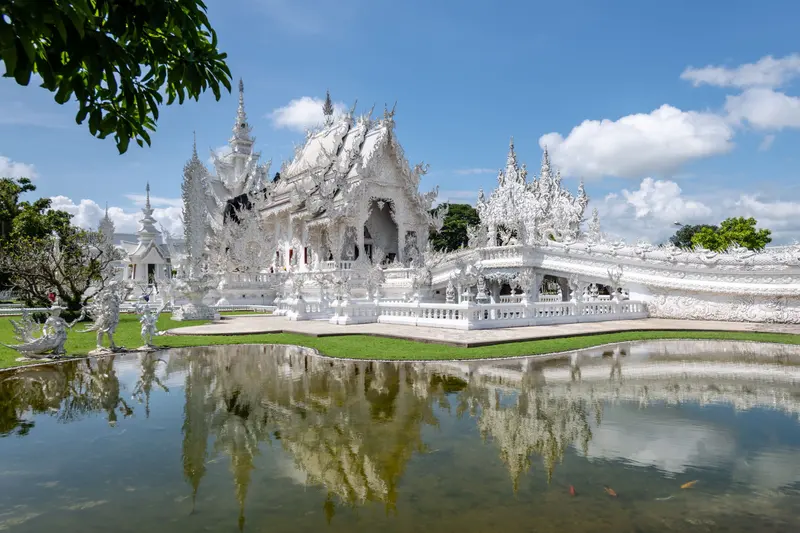
Chiang Rai
Arabica from Doi Chang and Doi Tung, roasted on Sanambin Road a few blocks from the gold clock tower. 345 cafés.
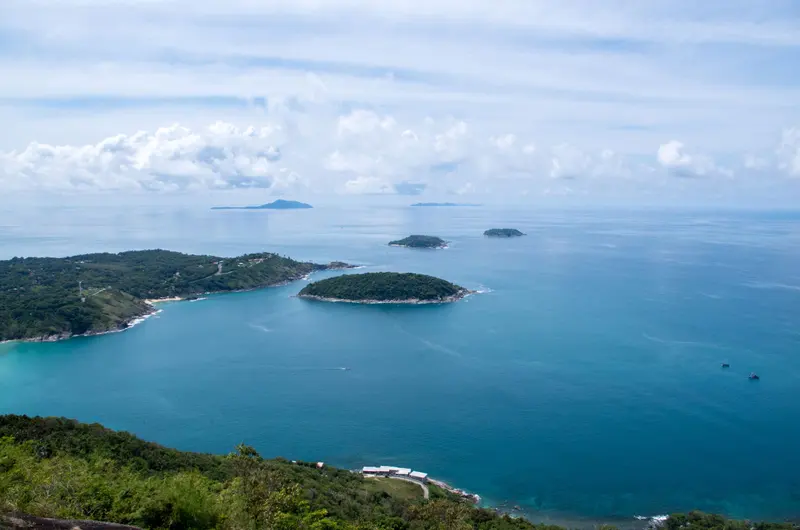
Phuket
Sino-Portuguese shophouse cafés in Old Town and beach cafés from Kata to Kamala. 814 cafés.
Northern arabica, southern robusta
Robusta grows in the south at around 500–600 m in a hot, humid climate, mostly in Chumphon, Ranong, Surat Thani and Nakhon Si Thammarat, and much of it goes into instant coffee.3 Arabica needs altitude, roughly 800–1,000 m and above, which limits it to the north; Chiang Rai grows the most, followed by Chiang Mai and Mae Hong Son.3
The northern crop began as a development program: King Bhumibol's royal coffee initiative, launched in 1969, aimed to wean highland ethnic minorities off opium growing.3 The Doi Tung project in Chiang Rai, set up in the late 1980s under Princess Srinagarindra, did the same with coffee and macadamia, and its coffee received a Thai geographical indication in 2006.4
Thai coffee production in figures
According to Office of Agricultural Economics data compiled by Brazil's agricultural attaché in Bangkok, Thailand produced 21,677 tonnes of coffee in 2021 and 16,574 tonnes in 2023, of which 7,991 tonnes were arabica and 8,583 robusta.1 In the 12 months to September 2024 the total was just over 13,000 tonnes, led by Chiang Rai (4,736), Chiang Mai (3,430) and Chumphon (3,161).1
The planted area fell 19% between 2021 and 2024, to about 34,600 ha, mainly through competition from more profitable crops such as durian. Robusta land shrank by about 40% while arabica's grew, and arabica now covers about 60% of the total.1 Imports filled the gap: Thailand bought US$187.7 million of green coffee in 2023, two-thirds of it from Vietnam.1
Oliang, cha yen and coffee by the bag
The old way to drink coffee in Thailand is oliang (โอเลี้ยง), a name borrowed from Teochew words meaning black and iced. The grounds are robusta roasted with grains and seeds, corn, soybeans, rice or sesame among them, and the brew drips through a cloth sock before it meets the ice.5 Thai coffee is usually served with condensed milk and plenty of sugar, and the word for filtered rather than instant coffee is kafae thung (กาแฟถุง, "bag coffee").6
The tea counterpart is cha yen (ชาเย็น), Thai iced tea made from strongly brewed Ceylon or local Assam tea, sweetened with sugar and condensed milk and topped with evaporated or whole milk.7 ChaTraMue is the dominant brand of Thai tea.7
Thailand's café boom
Chains set the scale. The energy company PTT opened Café Amazon in 2002 to put coffee shops inside its petrol stations, starting on Vibhavadi Rangsit Road in Bangkok; by October 2025 it had more than 5,000 locations worldwide.8 Thailand's own Black Canyon Coffee and S&P still outsell Starbucks in the country.6
Independent cafés now dominate. Commerce ministry figures put Thai consumption at more than 340 cups per person a year and the domestic market at 65 billion baht; 415 new coffee businesses registered in the first half of 2025, and independent shops hold 94.4% of the market.2 Import tariffs on coffee are the second highest in the world, which pushes roasters toward Thai beans.9
Chiang Rai, Chiang Mai, Bangkok and Phuket
Chiang Rai grows more arabica than any other province.3 Its best-known farms are on Doi Chang, in Wawi subdistrict of Mae Suai district, where more than 1,000 Akha, Lisu and Yunnanese Chinese households live at 1,000–1,700 m, most of them now coffee farmers.3 Forty families there received arabica plants through the Thai-German Highland Development Project in 1983, and by 2020 the village's Doi Chaang brand counted more than 200 franchise and partner cafés in Thailand.3
Chiang Mai is the second-largest coffee province after Chiang Rai, and the Royal Project, which began in 1969, is headquartered in Mae Hia in the province's Mueang district.110 The city's specialty scene took off in the 2010s: Akha Ama, which buys from Akha farming villages, began trading in 2010, and Ristr8to opened on Nimmanhaemin Road in 2011.11 When Cathay Pacific's magazine profiled the scene in 2020, Nimmanhaemin was thought to hold the densest concentration of coffee shops in the country.11
In Bangkok, Roots opened its first brew bar at theCOMMONS in Thonglor and switched to 100% Thai beans in 2018, and Hands and Heart moved its roastery and café to Ekkamai in 2025.12 Specialty cafés spread from Sukhumvit to Ari, Silom, Sathorn and the Chinatown lanes of Yaowarat and Talat Noi.12 In May 2026 Bangkok hosted World of Coffee, the Specialty Coffee Association's Asian trade show, at BITEC, after editions in Busan in 2024 and Jakarta in 2025.13
In Phuket, the roaster Hock Hoe Lee traces back to 1958 and to Cheng Long, a Chinese settler whose first customers were the island's tin miners; the family firm now supplies many of Phuket's big hotel chains.14 In Phuket Town the kopitiam, the Hainanese-style coffee shop found across Southeast Asia, survives with the island's Peranakan and Chinese community, and shophouses near Thalang Road served traditional coffee for ฿40 as of 2026.15 The specialty cafés pour arabica from Chiang Rai, Doi Chang and Doi Inthanon.15
Sources
- Mercado de café na Tailândia (BAC-01-2025), citing OAE/MOAC and USDA data, Brazilian Ministry of Agriculture (MAPA), agricultural attaché in Bangkok, January 2025, accessed October 2026
- Coffee consumption surges as Thai market defies economic slump, The Nation (Thailand), 3 August 2025, accessed October 2026
- Doi Chaang Coffee: A Sufficiency-Based Community Enterprise for Sustainability, NIDA Case Research Journal, Vol. 12 No. 2 (2020), Priyanut Dharmapiya, accessed October 2026
- Doi Tung coffee, Wikipedia, accessed October 2026
- Oliang, Wikipedia, accessed October 2026
- Thailand travel guide (Tea and coffee), Wikivoyage, accessed October 2026
- Thai tea, Wikipedia, accessed October 2026
- Café Amazon, Wikipedia, accessed October 2026
- Thai Coffee: Specialty Coffee Production in the Land of Smiles, The Way to Coffee, accessed October 2026
- Royal Project Foundation, Wikipedia, accessed October 2026
- How Chiang Mai became Thailand's coffee capital, Cathay Pacific, accessed October 2026
- Bangkok Coffee Shop Guide 2026: Best Specialty Cafés & Roasters, The Way to Coffee (updated May 1, 2026), accessed October 2026
- World of Coffee Asia heading to Bangkok in 2026, Daily Coffee News (May 19, 2025), accessed October 2026
- 5 Best Coffee Roasters in Phuket, Expique (March 2, 2021), accessed October 2026
- Coffee and Café Culture in Phuket, Phuket Expat Guide (July 2026; price table updated April 2026), accessed October 2026
Guides
Café Wi-Fi for travelers who need to work
Café Wi-Fi abroad: public-network safety, eSIM and SIM registration in Vietnam, Thailand and Peru, mobile vs fixed speeds for 2026, and plug types by country.
Coffee travelThe coffee harvest calendar and when to see it
Coffee harvest months in Vietnam, Thailand, Indonesia, Colombia, Mexico and Peru, with Brazil and Ethiopia: when to visit farms and when new crop arrives.
How to orderHow to order coffee in Thailand and how to make it less sweet
Order coffee in Thailand: oliang, kafae boran, cha yen, wan noi or mai wan, ice, street carts vs Chiang Mai roasters, 2026 prices in baht and tipping.
Cafés in Thailand: questions
Where is coffee grown in Thailand?
Thailand grows arabica in the northern hills, mainly in Chiang Rai, Chiang Mai and Mae Hong Son, at roughly 800–1,000 m and above. Robusta grows in the humid south at around 500–600 m, mostly in Chumphon, Ranong, Surat Thani and Nakhon Si Thammarat. In the year to September 2024, Chiang Rai, Chiang Mai and Chumphon were the top three provinces.
What is the difference between oliang and cha yen in Thailand?
Oliang is coffee: a black iced brew of robusta roasted with grains and seeds such as corn, soybeans, rice or sesame, sweetened and filtered through a cloth sock. Cha yen is tea: strongly brewed Ceylon or local Assam tea, sweetened with sugar and condensed milk, then topped with evaporated or whole milk over ice.
How much coffee does Thailand produce each year?
According to Office of Agricultural Economics data, Thailand produced 16,574 tonnes of coffee in 2023, down from 21,677 tonnes in 2021, and just over 13,000 tonnes in the year to September 2024. Robusta land is shrinking as farmers turn to crops such as durian, and Thailand imported US$187.7 million of green coffee in 2023, mostly from Vietnam.
Your café deserves better than a pin someone else dropped
Free listings are free for good. A featured page gives you photos, a menu and your own URL, in your café's own design, for less than a coffee a day.