
Cafés in Peru from Lima to Arequipa
Barranco and Miraflores bars in Lima, San Blas in Cusco, Pisac in the Sacred Valley, Arequipa's roasters, plus café pasado.
Photo: Alex Pereyra, Pexels License
Peru is the world's ninth-largest producer and exporter of conventional coffee, according to the agriculture ministry, MIDAGRI.1 In 2025 it exported 242.3 million kg worth US$1.80 billion, a record.12 The exporters' association ADEX put the rise at 63% in value on just 2% more volume, with organic coffee making up 15% of the value.2 Between January and November, the United States, Germany, Belgium and Canada bought 71% of it.3
Most of that coffee comes from small farms. More than 223,000 families work in the chain, 85% of growers farm between 1 and 5 ha, and only about 30% belong to an association, mostly cooperatives.1
Peruvians drink far less than they grow. In November 2025 the Junta Nacional del Café (JNC), the growers' national board, put consumption at 1.6 kg per person a year, up from about 300 g fifteen years earlier, with a target of more than 2 kg by 2030.4 Colombians drink about 2.5 kg a head and Brazilians about 5.5 kg.3
Peru's café cities
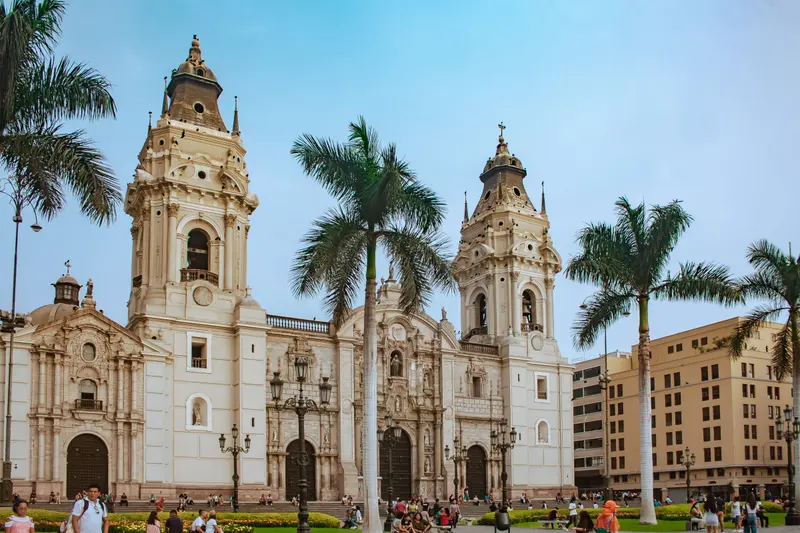
Lima
Cafés from Barranco and Miraflores to the historic center. 415 cafés.
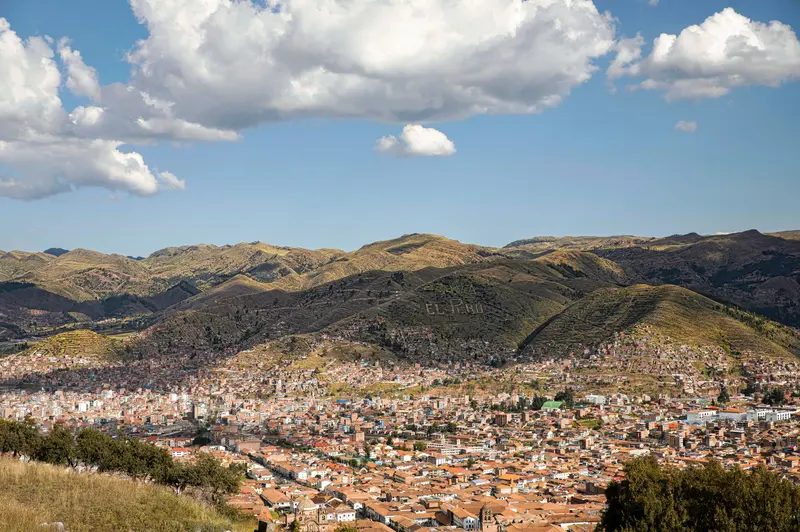
Cusco
Cafés around the Plaza de Armas and up the lanes of San Blas. 131 cafés.
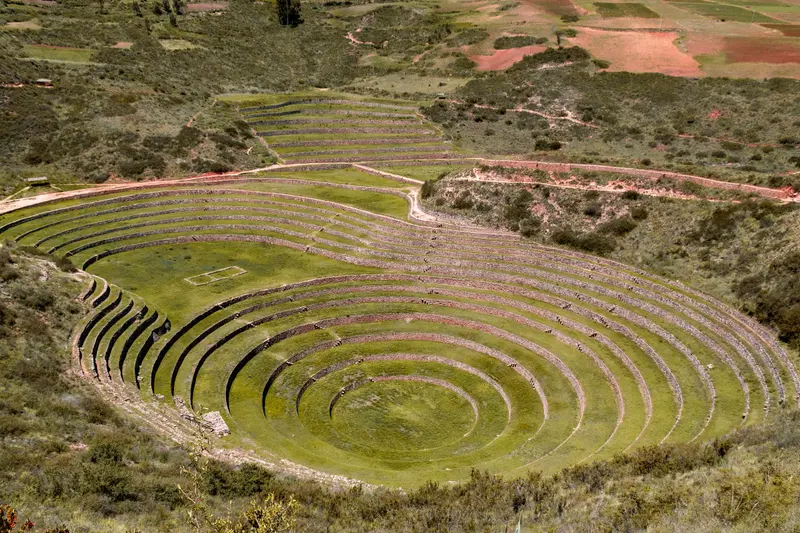
Pisac & Sacred Valley
Market-town cafés in Pisac and along the Urubamba valley to Ollantaytambo. 41 cafés.
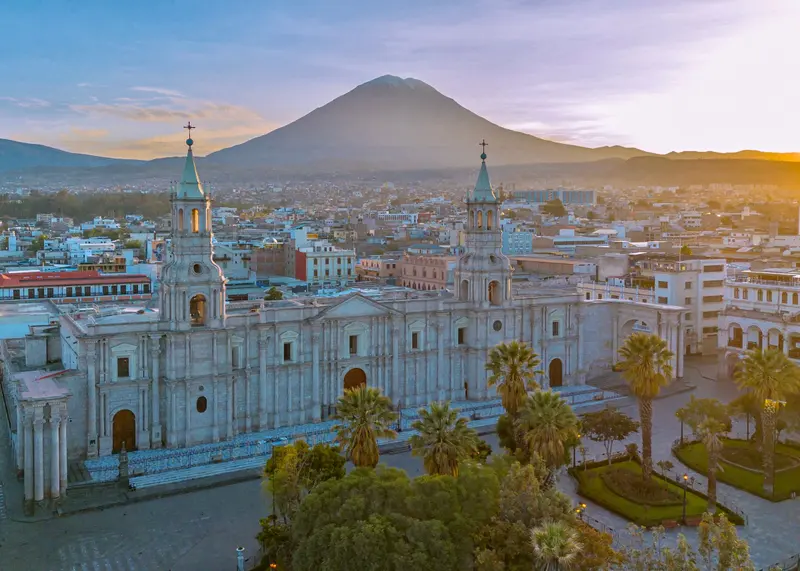
Arequipa
Cafés on Calle Santa Catalina by the monastery, roasters on Calle San Francisco, under El Misti. 50 cafés.
From Chinchao to the Coffees from Peru brand
Coffee reached Peru in the middle of the 18th century, probably first in the district of Chinchao in Huánuco, and in the 19th century it spread to the province of Chanchamayo in Junín.5 The specialty trade is younger: Peru began selling specialty coffee more than 30 years ago, and about 6,000 families now grow it, mostly arabica grown above 1,000 m.5
An early sign of what the southern valleys could do came in 2010, when Tunki, a coffee from Puno, was named the best specialty coffee in the world at the Specialty Coffee Association of America's fair, ahead of more than 120 entries.1 In 2018 the government launched the Coffees from Peru brand together with a national action plan for coffee that runs to 2030.5
Where Peruvian coffee grows
Coffee grows in 16 of Peru's regions; MIDAGRI names San Martín, Cajamarca, Junín, Cusco, Amazonas, Huánuco and Pasco as the main ones.1
Peru held its first Cup of Excellence, the Taza de Excelencia, in 2017, won by Juan Heredia Sanchez of Cajamarca with 92.25 points for a Caturra and Bourbon lot.5 Dwight Aguilar Masías of the Nueva Alianza farm in Santa Teresa, in Cusco's province of La Convención, won in 2018 and again in 2021, the latter with a Geisha grown at 1,820 m, and became the first producer to win twice.6
In the 2025 competition, 14 of the 32 winning lots came from Cusco and 11 from Cajamarca, while the top score, 90.64, went to a washed Geisha from Cajamarca.7
Café pasado, café con leche and café filtrado
The traditional Peruvian cup is café pasado (literally "passed-through coffee"), a brewing method more than a drink. Ground coffee and hot water go into the top chamber of a two-part pot, and a strong extract drips into the bottom one.8 The extract is thinned with hot water at the table, or poured into hot milk for café con leche.89
It is a household ritual as much as a menu item: a Lima home cook interviewed in 2018 learned it from her grandmother and made it for her family every Sunday morning.8 Half of Peruvian homes keep ground coffee, according to the Cámara Peruana del Café y Cacao.4
In cafés the concentrate traditionally comes in a small pitcher, and in 2015 it was on most Lima menus, often made from instant coffee. A pour-over, in Peruvian usage, is café filtrado.9
Baristas, rankings and a coffee passport
Peru's baristas organized in 2009 as the association Artebar, which ran its first training courses in 2010, and specialty coffee shops have multiplied since 2016.5 In the 2025 edition of The World's 100 Best Coffee Shops, Puku Puku, a chain of 10 cafés in Lima and Arequipa, placed 20th, and Three Monkeys Coffee in Cusco placed 22nd.10 On the South American edition of the same ranking, published in October 2025, 23 of the 100 cafés were Peruvian.16
Exporters now court local drinkers as well. For the summer 2026 edition of the Pasaporte del Café Peruano, ADEX and Agroideas, a MIDAGRI program, issued a passport costing S/ 5 (as of 2026) that collected stamps at 40 cafés in Lima and Callao until June 30.3
Lima, Cusco, the Sacred Valley and Arequipa
In 2015 Lima's strongest specialty cafés were concentrated in the tourist districts of Miraflores, Barranco and San Isidro.9 Those three still matter, but a 2025 survey by the Cámara Peruana del Café y Cacao counted 148 specialty cafés in the capital, not counting chains, and found new clusters in Jesús María, Pueblo Libre and Magdalena del Mar and in northern districts such as Los Olivos and Puente Piedra. Its specialty winners were Monótono in Barranco, Punto Café in Miraflores and Armache in Los Olivos.11
Cusco sits at 3,399 m, receives more than 2 million visitors a year and is the base for Inca sites including Machu Picchu.12 The San Blas neighborhood has long been known as the barrio de los artistas y artesanos (artists' and artisans' quarter), and as tourism grew it also became a barrio turístico.13 Baristas Neto Solórzano, Iván Salas and Diego Huillca founded Three Monkeys Coffee to take Cusco coffee across the city, and Florencia y Fortunata, 100th on the 2025 world list, buys coffee grown by women.10
Pisac belongs to Calca province, whose main river, the Willkanuta, flows through the Sacred Valley.14 The same province takes in the valleys of Yanatile, whose third specialty-coffee auction, in September 2024, priced the winning Geisha lot at S/ 10,000 per quintal.1514
Arequipa, in the south, had two cafés on that 2025 South American list: Kafi Wasi, a café and roastery, in second place and Oso Café in 28th.16 Puku Puku, 20th in the world, runs cafés there as well as in Lima.10
Sources
- Midagri: exportaciones de café superaron los USD 1,700 millones en 2025, Andina (February 13, 2026), accessed October 2026
- Exportación de café orgánico crece y aporta el 15% en valor del total de café exportado, Agraria.pe (March 6, 2026), accessed October 2026
- Las exportaciones de café peruano llegan a más de 50 países en diferentes continentes, Andina (February 2, 2026), accessed October 2026
- Al 2025, la exportación peruana de café superaría los US$ 1,600 millones, Agraria.pe (November 28, 2025), accessed October 2026
- A Brief History of Peru's Specialty Coffee Production and Consumption, Specialty Coffee Association (May 2024), accessed October 2026
- Taza de Excelencia 2021: el mejor café del Perú es de La Convención, Agraria.pe (November 2, 2021), accessed October 2026
- Perú 2025: Cup of Excellence results, Alliance for Coffee Excellence, accessed October 2026
- From Tinto to Pasado: Coffee Brewing in Latin America, Perfect Daily Grind (January 5, 2018), accessed October 2026
- Origen Tostadores: Go Here For Great Coffee In Lima, Peru, Sprudge (June 30, 2015), accessed October 2026
- Estas cinco cafeterías peruanas brillan entre las 100 mejores del mundo, Forbes Perú (February 18, 2025), accessed October 2026
- Consumo de café de especialidad se expande a más distritos de Lima, según resultados de Lima Experience 2025, Infobae Perú (December 12, 2025), accessed October 2026
- Cusco, Wikipedia, accessed October 2026
- Entre lo global y lo local: San Blas, un barrio heterogéneo, La Colmena, Pontificia Universidad Católica del Perú (no. 8, 2015), accessed October 2026
- Calca Province, Wikipedia, accessed October 2026
- Productores de Cusco venden a más de S/ 10 mil el quintal en subasta de cafés especiales, Agraria.pe (September 12, 2024), accessed October 2026
- 23 cafeterías peruanas entre las 100 mejores de Sudamérica: cuáles son y dónde se encuentran, Infobae Perú (October 27, 2025), accessed October 2026
Guides
Café Wi-Fi for travelers who need to work
Café Wi-Fi abroad: public-network safety, eSIM and SIM registration in Vietnam, Thailand and Peru, mobile vs fixed speeds for 2026, and plug types by country.
Coffee travelThe coffee harvest calendar and when to see it
Coffee harvest months in Vietnam, Thailand, Indonesia, Colombia, Mexico and Peru, with Brazil and Ethiopia: when to visit farms and when new crop arrives.
How to orderHow to order coffee in Spanish from Mexico to Paraguay
Tinto in Bogotá, americano in Mexico, café pasado in Lima, cocido in Asunción: the coffee words, sugar, sizes, the bill and tipping in four countries.
Cafés in Peru: questions
What is café pasado in Peru?
Café pasado is Peru's traditional way of making coffee. Ground coffee and hot water go into the top chamber of a two-part pot, and a strong extract drips into the bottom. The extract is thinned with hot water at the table or poured into hot milk for café con leche. In Peruvian cafés a pour-over is called café filtrado.
Where is coffee grown in Peru?
Coffee grows in 16 of Peru's regions, led by San Martín, Cajamarca, Junín, Cusco, Amazonas, Huánuco and Pasco. In Peru's 2025 Cup of Excellence, 14 of the 32 winning lots came from Cusco and 11 from Cajamarca. A farm in Santa Teresa, in Cusco's province of La Convención, won the competition in 2018 and again in 2021.
How much coffee does Peru export and drink?
Peru exported 242.3 million kg of coffee worth US$1.80 billion in 2025, a record, 63% more in value than in 2024. It is the world's ninth-largest producer and exporter of conventional coffee. Peruvians drink about 1.6 kg per person a year, up from about 300 g fifteen years earlier, against about 2.5 kg in Colombia.
Your café deserves better than a pin someone else dropped
Free listings are free for good. A featured page gives you photos, a menu and your own URL, in your café's own design, for less than a coffee a day.