
Cafés in Colombia Medellín, Bogotá and Cartagena
El Poblado roasters in Medellín, Chapinero coffee bars in Bogotá and Cartagena's street tinto, plus the perico and where beans grow.
Photo: Chris Rodriguez, Pexels License
Colombia is the world's third-largest coffee producer, after Brazil and Vietnam,2 and the largest producer of washed mild arabica.1 In 2024 it harvested 13.99 million 60 kg bags, about 23% more than in 2023 and the biggest crop since 2019, and exported a preliminary 12.3 million bags.1 Coffee supports about 560,000 rural families, represented by the Federación Nacional de Cafeteros (FNC), the national growers' federation.1
Colombians drink less of it than that scale suggests. The exporters' association Asoexport puts consumption at 2.5 kg per person a year, about 330 cups, fifth in Latin America behind Brazil (6.10 kg), Costa Rica, El Salvador and Venezuela.2 The country also imports about 1.52 million bags a year, mainly from Brazil, Peru, Vietnam and Ecuador.2
Colombia's café cities
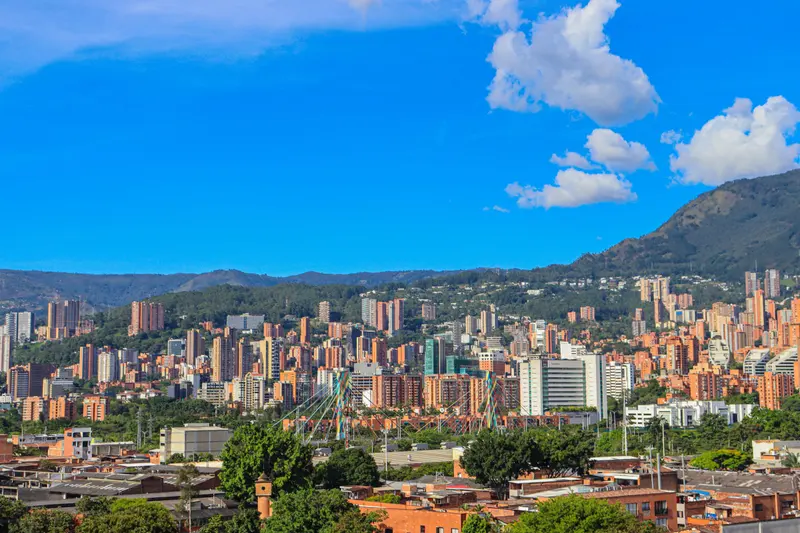
Medellín
Specialty cafés in a city built up the slopes of the Aburrá Valley. 191 cafés.
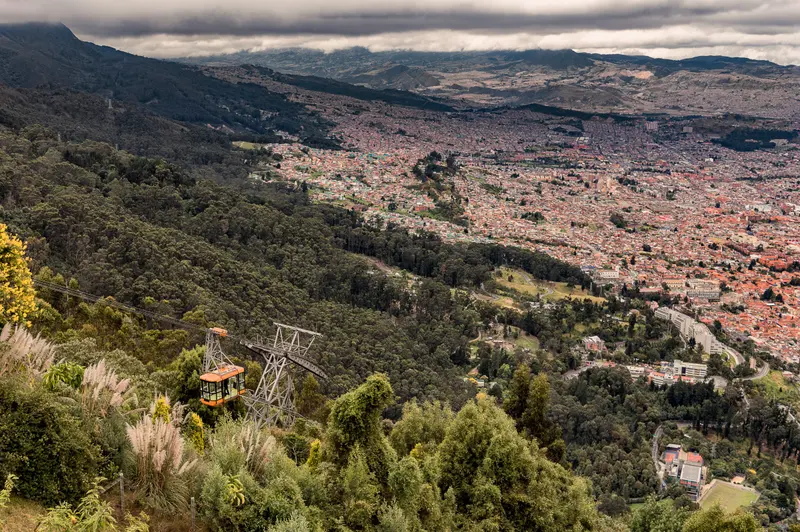
Bogotá
Street tinto by the cup, old cafés in La Candelaria and specialty bars in Quinta Camacho. 830 cafés.
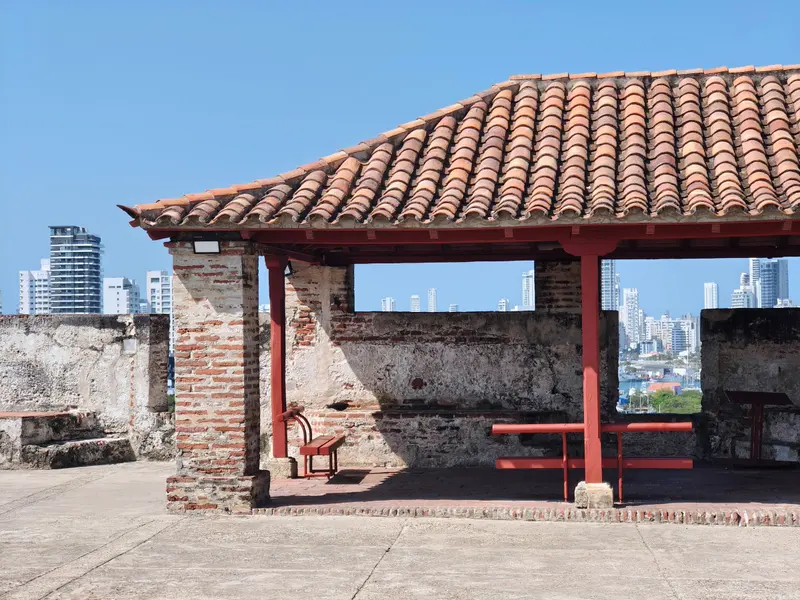
Cartagena
Tinto from thermoses on the plazas, espresso inside the walled city and roasters in Getsemaní. 48 cafés.
From Jesuit missions to the growers' federation
Coffee came with the Jesuits. The earliest written record is in El Orinoco ilustrado, José Gumilla's book of 1730, which mentions coffee at the mission of Santa Teresa de Tabajé.3 Commercial growing began in the northeast near the Venezuelan border, where tradition credits a priest, Francisco Romero, with spreading the crop by handing parishioners in Salazar de las Palmas coffee planting as penance after confession.3
Small farms in Santander and Norte de Santander multiplied from 1875. In the early 20th century, settlers clearing new land in Antioquia, Caldas, Valle and northern Tolima set the pattern that still defines Colombian coffee: the small family farm.3 On June 27, 1927, growers at the second national coffee congress in Medellín founded the FNC, which still steers the sector a century later.4
Where Colombian coffee grows
One department leads the harvest. Huila grew 19.65% of Colombia's coffee in 2025, up from 19.08% in 2024, and has been the largest producer for 15 consecutive years. Its biggest coffee municipality is Pitalito, with 17,790 ha planted.5
The best-known landscape lies further north, in Caldas, Risaralda and Quindío, the Eje Cafetero (coffee axis). In 2011 UNESCO inscribed the Coffee Cultural Landscape of Colombia, 141,120 ha of farms and 18 towns spread over six sites, as a World Heritage Site.6
Tinto, perico, pintadito: how Colombians order
The everyday cup is a tinto, a strong black coffee, often sweetened with sugar and sold on street corners from insulated flasks.12 On the Caribbean coast, in Barranquilla, Cartagena and Santa Marta, the vendors are called tinteros, and in Bogotá "¿nos tomamos un tintico?" is an invitation to stop and talk as much as to drink.7
Milk changes the name by region. In Bogotá and the Cundiboyacense plateau, a perico is a small coffee with milk, often taken with almojábana or pandebono, two cheese breads. In Antioquia and the Eje Cafetero, a pintadito has just a little milk, and a chaqueta is black coffee mixed with hot aguapanela, panela (unrefined cane sugar) dissolved in water.7
The counter sets the price more than the city does. In October 2026, El Colombiano found tintos at COP 1,000–1,500 in bakeries around Parque de Guadalupe in Medellín's Manrique, from about COP 4,700 at Pergamino, COP 5,300 at Juan Valdez and COP 9,500 at Starbucks.8
Pasilla, Juan Valdez and specialty coffee
Historically most Colombian coffee was exported, and the lower grade left for the home market was known as pasilla.13 Tinto was traditionally brewed from those leftover beans.12 The FNC took its own brand to the high street in 2002, when it opened the first Juan Valdez Café in Bogotá; by 2022 the chain had more than 500 outlets in over 20 countries.9
One of the first specialty roasters was Bogotá's Amor Perfecto. Luis Fernando Vélez learned to use a French press on a trip to London in 1992 and founded the company in 1997. As of late 2025 it ran eight cafés in Bogotá and one in a heritage house in Armenia.10 His case was that Colombia needed its own roasters, baristas and cuppers before it could drink its best coffee.10 Amor Perfecto's barista Diego Campos won the 2021 World Barista Championship in Milan.13
Medellín, Bogotá and Cartagena
Medellín fills a narrow valley between two Andean ranges, with farms within reach.12 Pergamino, which Pedro Echavarría opened in El Poblado in 2012, comes from a family that has grown coffee in Antioquia for nearly 40 years and now works with more than 600 smallholders in Antioquia, Cauca and Nariño.11 El Poblado and Laureles are the usual neighborhoods for specialty coffee,12 while bakery counters in barrios such as Manrique pour the cheapest tintos in the city.8
Bogotá stands at about 2,640 m and stays cool all year.14 Its specialty cafés gather in Chapinero and Quinta Camacho, around Zona G, in Usaquén and, more thinly, in La Candelaria, the old center; most roast in house and buy straight from growers.13 Libertario, in Zona G, buys from about 100 farming families within 10 km of its own farm in Zipacón, Cundinamarca.13
In Cartagena street coffee is an organized trade: its vendors have their own association, 65 strong in October 2020, when about 50 of them went to city hall to complain that some vendors' thermoses had been seized and never returned.15
Sources
- Colombia produjo casi 14 millones de sacos de café en 2024, Forbes Colombia / EFE (January 8, 2025), accessed October 2026
- Los colombianos consumen 330 tazas de café al año, equivalentes a 2,5 kilos, Agronegocios (June 25, 2026), accessed October 2026
- Coffee production in Colombia, Wikipedia, accessed October 2026
- Fedecafé cumple 99 años y camina hacia un siglo como rectora sectorial, Agronegocios (June 27, 2026), accessed October 2026
- Huila afianza su reinado cafetero: ya produce casi uno de cada cinco sacos de Colombia y suma 15 años al frente, Portafolio (August 28, 2026), accessed October 2026
- Coffee Cultural Landscape of Colombia, Wikipedia, accessed October 2026
- ¿Tinto, perico o chaqueta? Así cambia la forma de tomar café en Colombia, Publimetro Colombia (October 1, 2026), accessed October 2026
- ¿$1.000 o $12.000? Esto cuesta un tinto, según el barrio de Medellín, El Colombiano (October 1, 2026), accessed October 2026
- Juan Valdez Café, Wikipedia, accessed October 2026
- De una prensa francesa en Londres a US$1,5 millones en exportaciones: la historia de Amor Perfecto, Forbes Colombia (November 21, 2025), accessed October 2026
- Pergamino Brings Local Coffee to Medellín and the World, Barista Magazine (December 8, 2023), accessed October 2026
- Guía de la cultura del café en Medellín, Perfect Daily Grind (June 11, 2021), accessed October 2026
- 10 Coffee Shops in Bogota to Visit in 2026, Flavors of Bogotá (February 2, 2026), accessed October 2026
- Bogotá, Wikipedia, accessed October 2026
- "Que nos dejen vender los tintos": trabajadores informales en el Centro, El Universal, Cartagena (October 19, 2020), accessed October 2026
Guides
Bringing coffee home: customs, carry-on and freshness
Roasted vs green coffee at US, EU, UK, Australian, NZ and Japanese customs, carry-on powder rules, roast dates, and what to buy in Vietnam or Ethiopia.
Working from cafésCafé Wi-Fi for travelers who need to work
Café Wi-Fi abroad: public-network safety, eSIM and SIM registration in Vietnam, Thailand and Peru, mobile vs fixed speeds for 2026, and plug types by country.
Coffee travelThe coffee harvest calendar and when to see it
Coffee harvest months in Vietnam, Thailand, Indonesia, Colombia, Mexico and Peru, with Brazil and Ethiopia: when to visit farms and when new crop arrives.
Cafés in Colombia: questions
What is a tinto in Colombia?
In Colombia, a tinto is a strong black coffee, often sweetened with sugar and sold on street corners from insulated flasks. It was traditionally brewed from pasilla, the lower-grade beans left for the home market. In October 2026 a tinto cost COP 1,000–1,500 at bakery counters in Medellín's Manrique, against about COP 5,300 at Juan Valdez.
Where is coffee grown in Colombia?
Huila is Colombia's largest coffee department: it grew 19.65% of the 2025 harvest and has led for 15 consecutive years. Further north, Caldas, Risaralda and Quindío form the Eje Cafetero, whose Coffee Cultural Landscape has been a UNESCO World Heritage Site since 2011. Antioquia, around Medellín, has been coffee country since early 20th-century settlement.
How much coffee does Colombia produce and drink?
Colombia harvested 13.99 million 60 kg bags of coffee in 2024, about 23% more than in 2023, and exported a preliminary 12.3 million bags. It is the world's third-largest producer, after Brazil and Vietnam. Colombians drink about 2.5 kg per person a year, roughly 330 cups, and the country imports about 1.52 million bags a year.
Your café deserves better than a pin someone else dropped
Free listings are free for good. A featured page gives you photos, a menu and your own URL, in your café's own design, for less than a coffee a day.