
Cafés in Indonesia Bali, Yogyakarta and Jakarta
Kintamani arabica and roasters in Bali, kopi joss at Yogyakarta's angkringan, and Jakarta's iced kopi susu and old Glodok coffee shops.
Photo: Cak Pan, Pexels License
Indonesia was the world's fourth-largest coffee producer in 2025, and most of what it grows is robusta.1 The USDA's Jakarta office forecast 11.3 million 60-kg bags for the 2025/26 crop year: 9.8 million of robusta and 1.5 million of arabica, with 6.5 million bags of green coffee going abroad.2 More than 90% of the crop comes from smallholders on farms that average about one hectare.1
A large share stays at home. The same forecast puts domestic use at 4.81 million bags.2 Per person the figure is modest: a 2019 study by TOFFIN and MIX MarComm magazine put it at about 1 kg in 2018, against 1.5 kg in Vietnam. The same study counted more than 2,950 chain coffee-shop outlets in Indonesia's big cities in August 2019, nearly three times the roughly 1,000 of 2016, and that census left out independent cafés.3
Indonesia's café cities
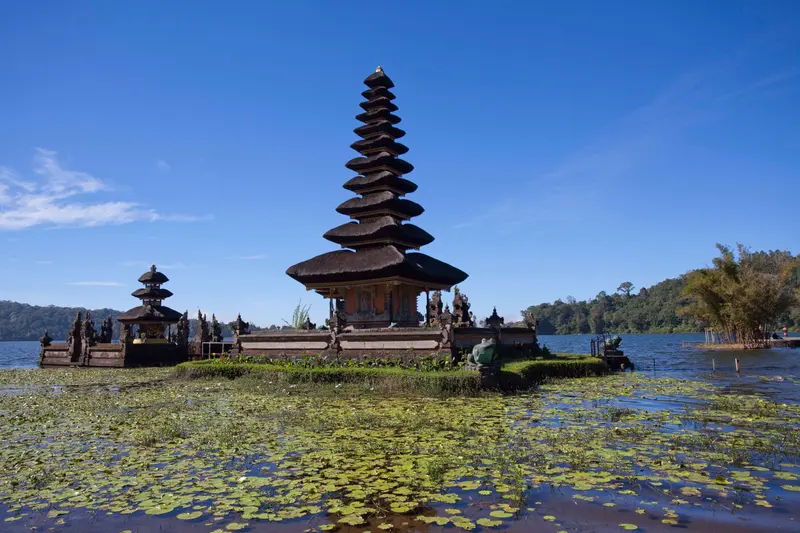
Bali
Kopi tubruk, Kintamani arabica and laptop cafés from Canggu to Ubud. 1141 cafés.
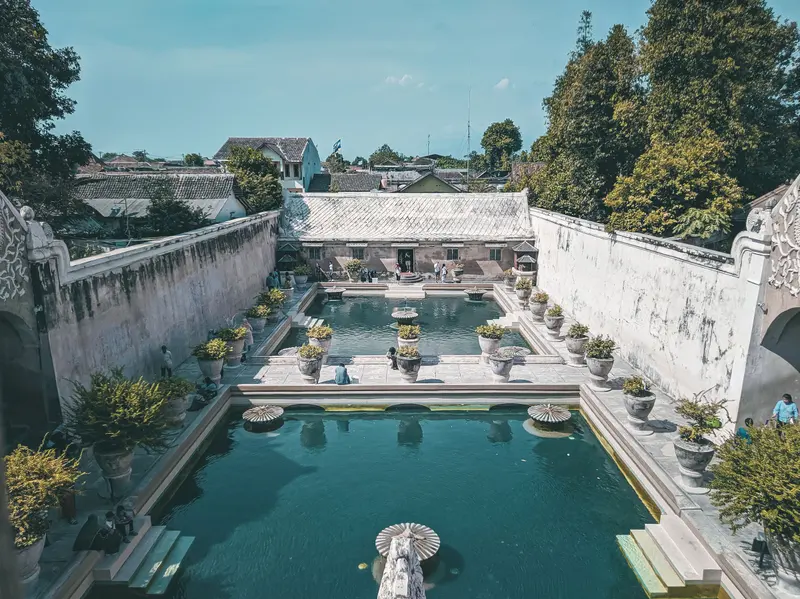
Yogyakarta
Kopi joss with a lump of charcoal at the angkringan, and a student-town café scene. 394 cafés.
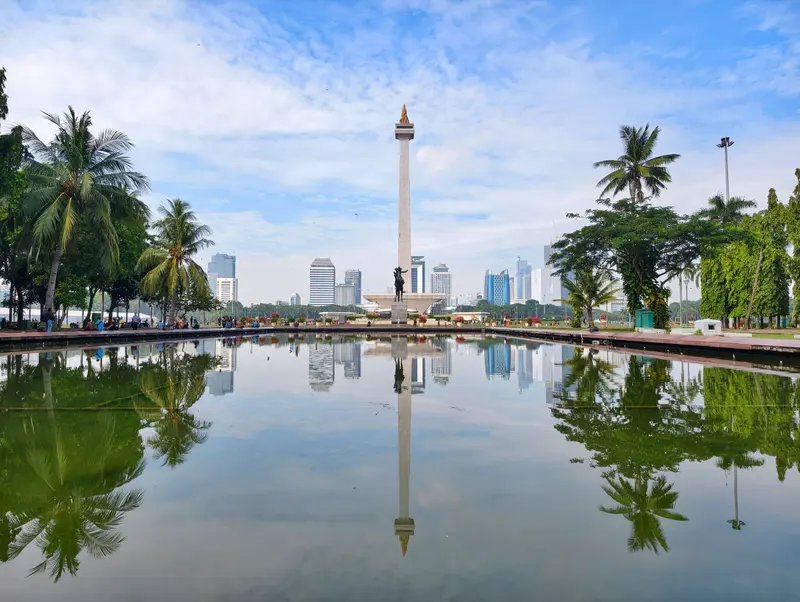
Jakarta
Es kopi susu from kopi shops, roasters in Kemang and Senopati and old kopitiam in Kota Tua. 824 cafés.
Java, 1696: how coffee reached Indonesia
Coffee came with the Dutch East India Company (VOC). In 1696 Amsterdam's mayor, Nicolaas Witsen, ordered the VOC commander on India's Malabar coast to have coffee planted in Java, the origin of "java" as a word for coffee.4 The first live plants reached Batavia, today's Jakarta, that year.5 They were lost to flooding.1 In 1699 Governor-General Henricus Zwaardecroon had arabica seeds planted along the Ciliwung River and as far as Sukabumi to test where the crop would grow.4
Between 1711 and 1726, Java coffee broke price records at the Amsterdam auctions and held 90% of that market.4 Under the Cultuurstelsel (forced cultivation system), which ran from 1830 to around 1870, farmers paid the colonial treasury in labor or in crops such as coffee.15 Java exported a million sacks of coffee in the 1830s alone.4 Leaf rust destroyed plantations from 1875; robusta was planted in Malang, East Java, in 1900 and reached Kerinci and South Sumatra between 1915 and 1920.4
Sumatra, Sulawesi and Bali: where the beans grow
Southern Sumatra carries the volume: Lampung, South Sumatra and Bengkulu produce half of Indonesia's coffee and up to 75% of its robusta. Arabica comes from the highlands. Gayo coffee is grown by smallholders under shade trees in Aceh at about 1,110–1,600 m, and Mandheling is a trade name for arabica from northern Sumatra, taken from the Mandailing people. In Sulawesi the Toraja highlands are the main high-altitude arabica area, and much of their coffee is traded through Kalosi.1
Bali's coffee comes mainly from Kintamani, the highlands between the Batukaru and Agung volcanoes. Growers there work within the subak abian, a farming system with a Hindu-based philosophy that favors organic or low-chemical methods; the coffee is usually wet-processed and harvested once a year, roughly July to September.1 In December 2008 Kintamani arabica received Indonesia's first Geographical Indication certificate, the legal protection of a named origin.6
Kopi tubruk, kopi joss and the regional cups
The basic Indonesian cup is kopi tubruk: ground coffee with hot water poured straight over it, unfiltered, drunk once the grounds have settled at the bottom of the glass.7 It is also the traditional preparation in Bali.1 Regional recipes go further. West Sumatra's kopi kawa is brewed from coffee leaves instead of beans; Tulungagung in East Java blends its dark-green kopi ijo with mung beans and spices; Ambon's kopi rarobang adds ginger, pandan, cinnamon, clove and roasted nuts.8
Yogyakarta's kopi joss is sweetened black coffee with a glowing lump of charcoal dropped into it. It began at Angkringan Lik Man near Tugu station, where many customers were railway workers from East Java who asked for kopi kothok, an East Javanese brew that Lik Man could not make. The charcoal was his substitute, and other vendors copied it.9 The name is thought to imitate the sound of hot charcoal meeting hot coffee.10
From the angkringan to Kopi Kenangan
Coffee in Indonesia was long a street-stall drink. In Yogyakarta the angkringan is the stall that sells nasi kucing (literally "cat rice", named for its small portions) alongside coffee. Angkringan Lik Man, near Tugu station and one of the first in the city, has traded since the 1950s; Yogyakarta's provincial tourism office says it passed to Lik Man in 1969 and opens from 18:00 until midnight.10
The newer culture runs on iced milk coffee. Kopi Kenangan opened its first outlet in Kuningan, South Jakarta, in 2017; its signature Kopi Kenangan Mantan ("coffee of ex-lover memories") is milk coffee sweetened with palm sugar, and by 2024 the chain had more than 900 outlets in six countries.11 Ready-to-drink coffee rose from about 50 million liters in retail sales in 2013 to almost 120 million in 2018. TOFFIN's 2019 market estimate assumed an average price of Rp22,500 a cup.3
Bali, Yogyakarta and Jakarta
Bali grows its own coffee, in Kintamani.1 Its specialty cafés cluster on the southwest coast, where a 2025 local guide splits its picks between Seminyak, Canggu, Petitenget and Berawa.12
Yogyakarta keeps both traditions. Kopi joss is still poured at angkringan near Tugu station.10 The specialty side has local roots too: Klinik Kopi has served coffee on Jalan Kaliurang in Sleman since 2013, takes its signature Kopi Jarwo from a grower in Temanggung, Central Java, and drew more visitors after it appeared in the 2016 film Ada Apa Dengan Cinta? 2.13
Jakarta's oldest coffee shops are in Glodok. Warung Tinggi Tek Sun Ho began in 1878 as a rice stall and general store and turned to coffee because it sold better; it is known for kopi jantan and kopi betina ("male" and "female" coffee), the first the bolder blend. Nearby, in Gang Gloria, Kopi Es Tak Kie began in 1927 as a coffee seller on the move and still serves its coffee iced, black or with milk only.14
Sources
- Coffee production in Indonesia, Wikipedia, accessed October 2026
- Indonesia Coffee Report: Exports Up, Though Tariffs and EUDR Linger (citing the USDA FAS Indonesia Coffee Annual, May 2025), Daily Coffee News (June 4, 2025), accessed October 2026
- Riset TOFFIN: Bisnis Kedai Kopi Makin Menggeliat di 2019, Industry.co.id (December 17, 2019), accessed October 2026
- Timeline of Milestones (coffee exhibition), Museum Nasional Indonesia (2022), accessed October 2026
- How coffee went from the hands of the Dutch to the world, The Jakarta Post (January 19, 2018), accessed October 2026
- Kintamani coffee gets certification, The Jakarta Post (December 13, 2008), accessed October 2026
- Alasan mengapa kopi tubruk diseduh tanpa disaring, IDN Times (August 6, 2026), accessed October 2026
- Inilah ragam racikan kopi Nusantara, Good News From Indonesia (February 14, 2017), accessed October 2026
- Kopi joss, Wikipedia, accessed October 2026
- Angkringan Lik Man, Visiting Jogja, Yogyakarta Provincial Tourism Office, accessed October 2026
- Kopi Kenangan, Wikipedia, accessed October 2026
- A Caffeine Lover's Guide to Seminyak and Canggu's Best Cafes, The Bali Bible (February 24, 2025), accessed October 2026
- Pepeng: kopi enak itu datang dari kebun, Good News From Indonesia (May 21, 2025), accessed October 2026
- Deret Kedai Kopi Legendaris di Jakarta, CNN Indonesia (October 3, 2020), accessed October 2026
Guides
The coffee harvest calendar and when to see it
Coffee harvest months in Vietnam, Thailand, Indonesia, Colombia, Mexico and Peru, with Brazil and Ethiopia: when to visit farms and when new crop arrives.
Coffee culturesIndonesian kopi from the tubruk glass to es kopi susu
Indonesian kopi explained: unfiltered kopi tubruk, charcoal kopi joss in Yogyakarta, Aceh’s sanger, palm-sugar es kopi susu and the civet cages of kopi luwak.
Working from cafésWorking from cafés in Chiang Mai and Bali: the two nomad hubs compared
Working from cafés in Chiang Mai and Bali: Nimman and Canggu, the DTV and E33G visas, internet speeds, coworking prices, smoke season and rainy months.
Cafés in Indonesia: questions
Where is coffee grown in Indonesia?
Indonesia's coffee volume comes from southern Sumatra, where Lampung, South Sumatra and Bengkulu produce half the national crop and up to 75% of its robusta. Arabica grows in the highlands: Gayo in Aceh, Mandheling in northern Sumatra, the Toraja highlands of Sulawesi, and Kintamani in Bali, which received Indonesia's first Geographical Indication in 2008.
What is kopi joss in Yogyakarta, Indonesia?
Kopi joss is a Yogyakarta drink of sweetened black coffee with a glowing lump of charcoal dropped into it. It began at Angkringan Lik Man near Tugu station, where railway workers from East Java asked for kopi kothok, which Lik Man could not make. The name is thought to imitate the sound of hot charcoal meeting coffee.
Where are the oldest coffee shops in Jakarta, Indonesia?
Jakarta's oldest coffee shops are in Glodok. Warung Tinggi Tek Sun Ho began there in 1878 as a rice stall and general store before turning to coffee, and sells bold kopi jantan and milder kopi betina. Kopi Es Tak Kie, in Gang Gloria, began in 1927 as a mobile coffee seller and serves its coffee iced, black or with milk.
Your café deserves better than a pin someone else dropped
Free listings are free for good. A featured page gives you photos, a menu and your own URL, in your café's own design, for less than a coffee a day.