Cafés in Uruguay Montevideo
From Montevideo's Ciudad Vieja and 18 de Julio to Pocitos, plus mate next to the cortado, café torrado and the city's notable bars.
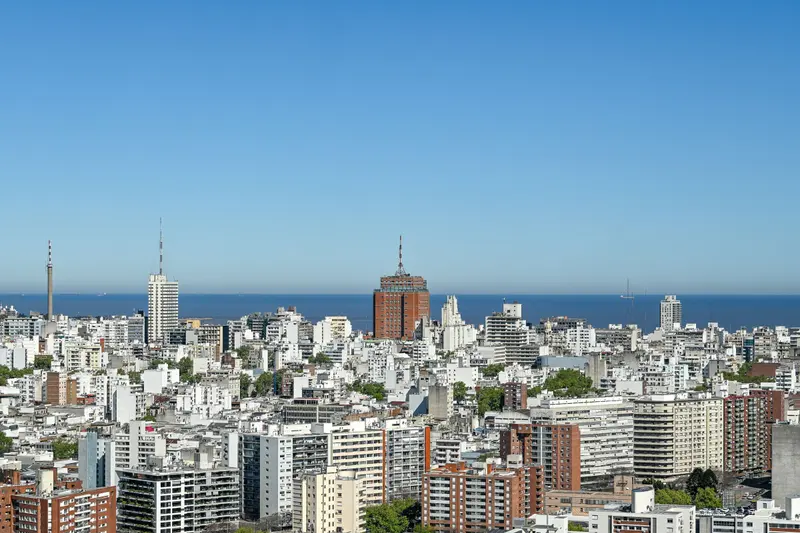
Photo: Nikolai Kolosov, Pexels License
Mate comes first in Uruguay. It is considered the national drink, taken hot and bitter, and since 1920 Uruguay has imported practically all the yerba mate it uses commercially.1 In 2023 that came to 29,795 tonnes of yerba, worth US$65 million and almost all of it from Brazil.2
Coffee is the smaller import. The same year Uruguay bought 1,956 tonnes of green coffee, 1,523 tonnes of it from Brazil and most of the rest from Colombia and Costa Rica.3 It also brought in 388 tonnes of roasted coffee, led by Brazil, Argentina and Italy.4 By weight, the yerba outweighed all that coffee more than twelve to one.234
Most of the coffee sold is instant or café torrado (sugar-roasted coffee), and in 2021 specialty coffee accounted for only about 3% of sales.5
Uruguay's café cities
Mate, the termo and the rueda
Mate is yerba steeped in hot water in a gourd and sipped through a bombilla, a metal straw with a filter. Since the invention of the vacuum flask, the termo (thermos) has replaced the kettle as the source of hot water, and mate is usually shared in a rueda (circle): one person, the cebador, prepares each gourd and passes it clockwise.1
The anthropologist Daniel Vidart wrote that mate "empareja las clases sociales, porque a todos pertenece": it levels social classes, because it belongs to everyone.1 Since 1978 the Museo del Gaucho y la Moneda in central Montevideo has held the country's largest collection of mates and bombillas, some from the colonial period.1
Café torrado and the specialty minority
Torrado coffee is roasted with sugar until the sugar carbonizes, giving the beans a glaze. It is banned in most countries, and in 2021 Montevideo Portal counted only five where it is sold legally: Argentina, Portugal, Spain, Mexico and Uruguay.5
Specialty coffee started from very little. Verónica Leyton, who opened her first coffee shop in March 2016 at 23, recalled that roasters were only just appearing and that everything had to be imported: the coffee, the roaster and the machines.5 Cristina Sosa, a barista who arrived from El Salvador around 2018, found specialty coffee little known in Uruguay; by 2021 the specialty café had become the country's most copied food-business model.5
Tertulias, the Sorocabana and the Cafés Notables
Montevideo's café life ran on the tertulia, the regular table of talk. Francisco San Román founded the Tupí Nambá in the 1870s.6 At 18 de Julio and Yaguarón, the large Café Montevideo held a political table tied to the Partido Colorado and the nearby newspaper El Día, plus a tango one, while the Ateneo had a literary circle led by Paco Espínola and Manuel de Castro.6
Tango shared the rooms. In Juan Antonio Varese's account, Argentine musicians who came to Montevideo early in the 20th century to avoid military service shaped the local tango, and playing it in cafés helped it win social acceptance.11
The Sorocabana opened in 1939 on the ground floor of the Palacio Montero, on the north side of Plaza de Cagancha, and served intellectuals, politicians and journalists for half a century until it closed in 1989; the building is still called the Edificio Sorocabana.7 Mario Benedetti wrote La tregua in the Sorocabana branch at 25 de Mayo 485, where a restaurant revived the name in December 2019.8
In 2026 the Municipio B and the Intendencia de Montevideo, backed by the culture ministry, began naming Cafés y Bares Notables. Bar Andorra received the first plaque in August, and the first eight also include Bar Marbella, Bar Paysandú, Montevideo al Sur and Santa Catalina Bar Café.9
Montevideo
More than a third of Uruguayans live in the capital: 1,287,452 people at the 2023 census, about 36.8% of the country.10 Montevideo keeps its old cafés in the Ciudad Vieja and along Avenida 18 de Julio, its newer roasters around Parque Rodó and Cordón, and its outdoor tables along the rambla from Punta Carretas to Pocitos.
Sources
- Mate (infusión), Wikipedia (Spanish), accessed October 2026
- Uruguay imports of maté (HS 090300) by country, 2023, World Bank WITS, UN Comtrade data, accessed October 2026
- Uruguay imports of coffee, not roasted (HS 090111) by country, 2023, World Bank WITS, UN Comtrade data, accessed October 2026
- Uruguay imports of roasted coffee (HS 090121) by country, 2023, World Bank WITS, UN Comtrade data, accessed October 2026
- Tostadoras y baristas: las mujeres del café, Montevideo Portal, Revista Galería (October 1, 2021), accessed October 2026
- Av. 18 de Julio: ni la borra del café, Delicatessen.uy (August 19, 2016), accessed October 2026
- Montero Palace, Wikipedia, accessed October 2026
- SOROCABANA. Con el mismo nombre y en el mismo lugar, Montevideo Portal (December 2, 2019), accessed October 2026
- Bar Andorra recibió la primera placa de Café y Bar Notable del Municipio B, Ministerio de Educación y Cultura, Uruguay (August 17, 2026), accessed October 2026
- Montevideo, Wikipedia, accessed October 2026
- Cafés montevideanos con historias (Juan Antonio Varese, Planeta, 2023), Hilario Books, accessed October 2026
Cafés in Uruguay: questions
Is mate or coffee more popular in Uruguay?
Mate. It is considered Uruguay's national drink, and in 2023 the country imported 29,795 tonnes of yerba mate, almost all from Brazil, against 1,956 tonnes of green coffee and 388 tonnes of roasted coffee. Most of the coffee sold in Uruguay is instant or café torrado, and specialty coffee was only about 3% of sales in 2021.
Where does Uruguay's coffee come from?
Uruguay imports its coffee. In 2023 it bought 1,956 tonnes of green coffee, 1,523 tonnes of it from Brazil and much of the rest from Colombia and Costa Rica, plus 388 tonnes of roasted coffee led by Brazil, Argentina and Italy.
What is café torrado in Uruguay?
Café torrado is coffee roasted with sugar until the sugar carbonizes and glazes the beans. It is banned in most countries, but Uruguay is one of five where it is sold legally, along with Argentina, Portugal, Spain and Mexico. Together with instant coffee it makes up most of the coffee sold in Uruguay.
Your café deserves better than a pin someone else dropped
Free listings are free for good. A featured page gives you photos, a menu and your own URL, in your café's own design, for less than a coffee a day.