
Cafés in Nepal Kathmandu
Chiya at every visit, arabica from the mid-hills of Gulmi, Palpa and Kavre, and Kathmandu's coffee houses in Thamel and Jhamsikhel.
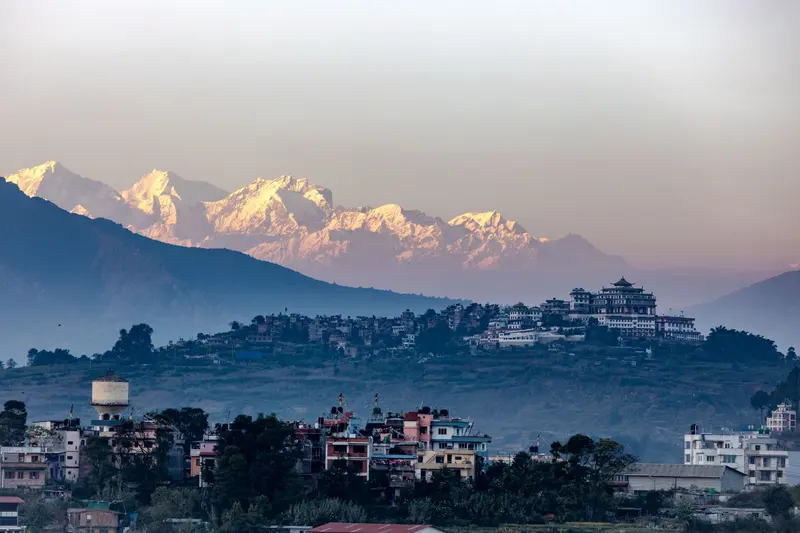
Photo: ASHOK KAPALI, Pexels License
Nepal is a tea-drinking country that also grows coffee. In fiscal 2024/25 it produced 642 tonnes of green coffee on 5,501 hectares of planted land, in 43 districts, with more than 30,000 farmers involved.4
Most of the harvest stays at home. Only about 10% is exported, mainly to Germany, Japan, Switzerland, South Korea, the UK and Australia; in the last fiscal year exports were 64 tonnes worth Rs 114.3 million, against imports of 230 tonnes worth Rs 144.1 million.4 Exported Nepali coffee has sold for an average of about US$16 a kilo, two to three times the price of the coffee Nepal imports.5
Nepal's café cities
Hira Giri's seeds and the first estates
The National Tea and Coffee Development Board's account begins in 1938, when a hermit, Hira Giri, carried coffee seeds from Burma (now Myanmar) to Aapchaur in Gulmi district.21 Some coffee traders credit Gurkha soldiers and Nepali workers on South Indian plantations instead. Either way, coffee stayed a curiosity plant for more than four decades.1
Commercial production started in 1976 with arabica brought from South India.3 The Nepal Coffee Company was set up at Manigram, Rupandehi, in 1983/84, and the main shift to commercial farming followed in the mid-1980s.2 Up to 2000, exports came to just 3.6 tonnes a year.1 At that point they earned Rs 673,000, while imports of instant coffee cost Rs 43.2 million.2
Private estates and exporters followed. In 1990 Ujjwal Rana began commercial farming in Nuwakot with Caturra seed from Papua New Guinea.2 By 2005 Nepal was exporting 65 tonnes of beans a year, and one Nepali company had shipped 23 tonnes the year before to Holland Coffee, a supplier to Starbucks.3
Mid-hill coffee on small farms
Nepali coffee grows in the mid-hills at 800 to 1,600 m, often among fruit trees and other crops rather than in monoculture estates.3 Gulmi, Palpa, Syangja, Lalitpur, Sindhupalchok and Kavre are among the growing districts.1 In 2019 Kavrepalanchowk produced the most, from 943 farms on 104.3 ha.2 Gandaki Province, around Pokhara, grew 156 tonnes in 2024/25, mainly in Kaski, Syangja, Gorkha, Lamjung, Tanahun and Parbat, and Pokhara alone has more than 1,500 coffee shops.4
Planting has run ahead of the harvest. Between fiscal 2013/14 and 2022/23 the coffee area grew from 1,911 to 3,655 ha, while output swung between 314 and 530 tonnes a year.5
Chiya first, then coffee
The everyday hot drink is chiya, tea. Dudh chiya (milk tea) is black tea boiled with milk, water and sugar, sometimes with ginger or cardamom.8 Tea planting goes back to the 19th century, when Colonel Gajraj Singh Thapa started plantations in Ilam and Soktim.8 Guests and colleagues are greeted with "Chiya khane?" ("Will you have tea?"), and refusing the cup is considered improper.7
Cafés came late. Until the late 1990s, coffee in Nepal meant instant coffee, found in a few hotels and restaurants.6 Nepal's towns probably had fewer than 20 coffee shops until 2003, and home consumption rose noticeably only after 2002.1
Kathmandu: Thamel, Jhamsikhel and the valley
Himalayan Java opened its first coffee house at Heritage Plaza in Kamaladi in 1999, aiming at office workers.611 In a valley with chiya pasals (tea stalls) in even the narrowest lanes, some customers refused to pay for a drink they found bitter.11 The café moved to Thamel, which had more tourists passing; the company began selling franchises in 2017 and had 43 outlets worldwide by 2022.6
Thamel, about 1.4 km north of Durbar Square, has been the center of Kathmandu's tourist trade since the hippie days: narrow alleys of shops, restaurants, budget hotels and mountaineering-gear stores.10
In Lalitpur, Jhamsikhel was mostly a quiet residential area close to Patan Durbar Square before restaurants, bars and cafés spread along its streets.9 Bagmati Province, which includes Kathmandu, drinks the most coffee in Nepal, ahead of Gandaki.4 Beans that are not Nepali mostly come from India, Italy, Thailand and Indonesia.6
Sources
- Coffee in Nepal: How Nepal learned to drink, and produce, the fancy beverage?, Onlinekhabar English (October 20, 2021), accessed October 2026
- Nepalis wake up and smell (Nepali) coffee, The Kathmandu Post (Prahlad Rijal, July 22, 2019), accessed October 2026
- Coffee, tea and we, Nepali Times (Daniel Haber, June 16, 2006), accessed October 2026
- पोखरामा नेपाली कफीको राष्ट्रिय प्रदर्शनी र कपिङ च्याम्पियनसिप, Onlinekhabar (Asar 19, 2083 BS / July 2026), accessed October 2026
- नेपालमा घट्दै कफी उत्पादन क्षेत्र, निर्यातभन्दा आयात १० गुणा बढी, Nepal Live (Kalpana Ghimire, Mangsir 2, 2080 BS / November 2023), accessed October 2026
- Gagan Pradhan: The man who introduced coffee culture in Nepal, The Annapurna Express (December 15, 2022), accessed October 2026
- The drink Nepal can't live without, The Kathmandu Post, Weekender (March 19, 2020), accessed October 2026
- Chiya: Nepal's Beloved Tea Tradition, Nepal Traveller (April 9, 2025), accessed October 2026
- Jhamsikhel: Then and Now, Nepal Traveller (September 15, 2022), accessed October 2026
- Thamel, Wikipedia, accessed October 2026
- Coffee with Gagan, Nepali Times (Ramjee Dahal, January 24, 2014), accessed October 2026
Cafés in Nepal: questions
When did coffee come to Nepal?
By the National Tea and Coffee Development Board's account, the hermit Hira Giri brought coffee seeds from Burma to Aapchaur in Gulmi district in 1938. Coffee stayed a curiosity plant for decades; commercial production began in 1976 with arabica from South India, and the Nepal Coffee Company was set up at Manigram, Rupandehi, in 1983/84.
Where is coffee grown in Nepal?
Nepal grows coffee in the mid-hills at 800 to 1,600 m, often among fruit trees and other crops. In 2024/25 it was planted on 5,501 hectares in 43 districts, including Gulmi, Palpa, Syangja, Lalitpur, Sindhupalchok and Kavre; Gandaki Province around Pokhara grew 156 of the 642 tonnes.
Do people in Nepal drink more tea or coffee?
Tea. Chiya, usually dudh chiya made by boiling black tea with milk, water and sugar, is Nepal's everyday drink, and guests are greeted with "Chiya khane?". Coffee caught on later: until the late 1990s it meant instant coffee, and Nepal's towns probably had fewer than 20 coffee shops until 2003.
Your café deserves better than a pin someone else dropped
Free listings are free for good. A featured page gives you photos, a menu and your own URL, in your café's own design, for less than a coffee a day.