El Prado & San Pedro
Aliño Café Resto Pub
- Wi-Fi
- Card payment
- Toilets
- Smoke-free indoors
- Bakery café
- Open late
- Brunch
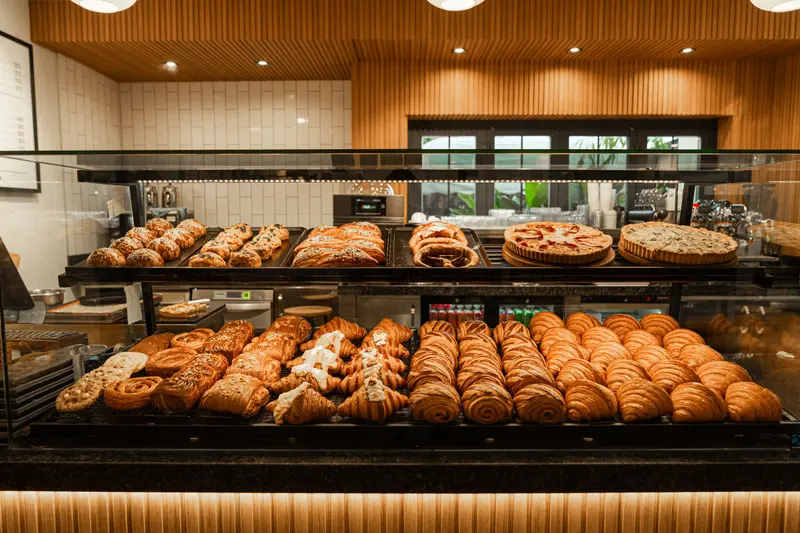
Confiterías by Plaza Murillo, pastelerías in Sopocachi and San Miguel, and the breads La Paz eats with coffee.
La Paz starts the day with bread. The marraqueta, a crusty roll of flour, water, yeast and salt that Bolivians also call pan de batalla, is eaten mainly in La Paz, and the departmental prefecture declared it part of the city’s cultural and historic heritage in 2006.1 Together with the llaucha, a cheese pastry baked on the oven floor, it is among the city’s most popular breakfast foods.2
Cakes and pastries come from confiterías (pastry cafés) and pastelerías (cake shops). The Casco Viejo has the most bakery cafés, followed by El Prado, San Miguel and Sopocachi, with single pastry shops as far out as Irpavi, Obrajes and Cota Cota.
Local tip: Buy salteñas early: vendors start selling at about 07:00, and most have sold out by mid-morning.3
Where these cafés are: Casco Viejo (4), El Prado & San Pedro (2), Sopocachi (2), San Miguel (2), Sagárnaga & Rosario (1), Irpavi (1), Obrajes (1), Cota Cota & Chasquipampa (1).
Nothing matches those filters here. See all cafés in La Paz.
One account of the marraqueta’s arrival credits a Greek baker, Constantino Callispieris, who reached Chulumani in 1908, moved to La Paz, opened a bakery on Calle Bueno and later prospered in Miraflores. La Paz has even named a street after the bread.1
The first llauchas were made with marraqueta dough, plenty of cheese and, for heat, ulupica chili. Their sellers were called llauch’iteras and kept them warm on tin trays over charcoal. One account dates their sale to the 1960s, when vendors at the Garita de Lima, in the west of the city, sold them from 05:30.2
The salteña takes its name from Juana Manuela Gorriti, a cook from the Argentine province of Salta, and families from Salta settled in La Paz in the 1830s. The earliest authenticated recipe for a similar pastry, though, is in the 1776 cookbook of Josepha de Escurrechea in Potosí.3
Salteñas are sold from about 07:00 until noon, and most vendors have sold out by mid-morning.3
Café Confitería Club La Paz, on Avenida Camacho, serves brunch and has Wi-Fi. Café André, at Calle Socabaya 416, is a bakery café with vegan dishes and brunch. The Writers Coffee, in the Gisbert bookshop at Calle Comercio 1270, sets a small chocolate biscuit beside every cappuccino.4
HB Bronze, on Avenida Illimani, makes its paninis with Bolivian parmesan rather than Italian and sells a gourmet sandwich of llama ham.4
In Sopocachi, Pastelería Coconut at Calle Miguel de Cervantes 2725 opens 08:30–20:00 Monday to Saturday, and Rockport Coffee is at Calle Pascoe 2635, with wheelchair access. Aliño Café Resto Pub, at Calle Colombia 257 near the Prado, uses house-made, artisanal doughs and serves organic coffee from 07:00.5 Felices, a café and pastry shop, is also in the El Prado area.
In San Miguel, Caramelau Bakery Shop is at Avenida Montenegro 990 and Gordini’s at Calle Jaime Mendoza 988. Farther south, Pastelería San Diego is on Avenida Sánchez in Irpavi, Rayuela on Avenida Héctor Ormachea in Obrajes and Tortas on Avenida Héroes del Chaco. On Calle Sagárnaga, the bakery café is Café del Mundo.

By area: Casco Viejo Sagárnaga & Rosario El Prado & San Pedro Sopocachi San Miguel
A llaucha is a La Paz cheese pastry, baked on the oven floor and eaten in the morning. The first ones were made with marraqueta dough, plenty of cheese and ulupica chili. Sellers once kept them warm on tin trays over charcoal, and one account has vendors at the Garita de Lima selling them from 05:30 in the 1960s.
Salteñas are a mid-morning snack in La Paz, especially on Sundays. Vendors start selling at about 07:00, and most have sold out by mid-morning. The name comes from Juana Manuela Gorriti, a cook from Salta in Argentina, though the earliest authenticated recipe for a similar pastry is from Potosí in 1776.
Café Confitería Club La Paz is on Avenida Camacho and Café André at Calle Socabaya 416, both with brunch. The Writers Coffee, inside the Gisbert bookshop at Calle Comercio 1270, serves each cappuccino with a small chocolate biscuit, and HB Bronze on Avenida Illimani makes paninis with Bolivian parmesan.
Free listings are free for good. A featured page gives you photos, a menu and your own URL, in your café's own design, for less than a coffee a day.