Zona T & El Retiro
Frambuesa
- Vegetarian options
- Bakery café
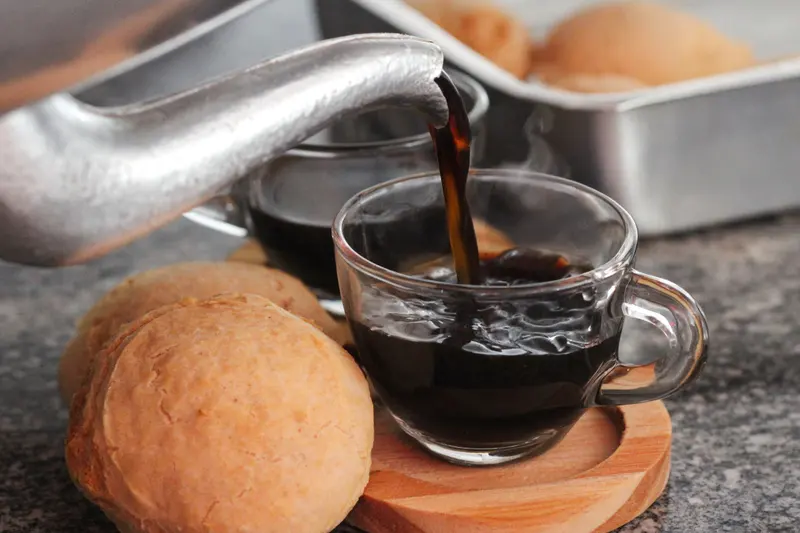
Almojábanas, roscón and chocolate with cheese, from Carrera Séptima to the south.
Photo: Nanda Mends, Pexels License
In Bogotá a panadería (bakery) is also where many people take their coffee. A 2025 Pulzo guide to the city's bakery breakfasts noted that every barrio has at least one or two, and that besides bread they sell desserts, tintos (small black coffees), aromáticas (herbal infusions) and fruit salads.3
A pastelería (pastry shop) leans toward cakes and puff pastry, and the oldest, such as Pastelería Florida, began as tearooms.1 The afternoon version of the habit is called tomar las onces: hot chocolate with bread or cake, usually with cheese dropped into the cup.5 The south of the city has the most of them.
Local tip: Order chocolate santafereño en agua if you want the traditional water-based version; most places also make it with milk.45
Where these cafés are: South Bogotá (13), La Candelaria & Centro (7), Salitre & Engativá (6), Suba (6), Teusaquillo (5), Barrios Unidos (4), Zona T & El Retiro (3), Quinta Camacho & Zona G (2), Usaquén (2), La Macarena & Centro Internacional (2), Chapinero (2), Cedritos & Toberín (1).
Nothing matches those filters here. See all cafés in Bogotá.
The almojábana is a round cheese bun made with corn flour, a substitute for the wheat of the Spanish original. Its recipe is thought to have reached Colombia through Soacha, near the Salto del Tequendama, in the 19th century, and in 2014 it was declared intangible cultural heritage of Cundinamarca, the department around the capital.6 Typical recipes start from cuajada (fresh curd) and salty cheese.7
TasteAtlas's October 2025 ranking of the world's breads put pandebono, a cheese bread, fourth and the almojábana 31st.7 For something sweet, the roscón is a ring of soft bread filled with bocadillo (guava paste) or arequipe (milk caramel) and dusted with sugar, best on the day it is baked.8
Chocolate santafereño takes its name from Santa Fe de Bogotá, one of the city's old names, and is traditionally made with water rather than milk. It is heated in an olleta, an aluminum pot, and frothed with a molinillo, a wooden beater spun between the palms. A piece of doble crema or Paipa cheese goes into the cup and is fished out once it softens, with an almojábana, a buñuelo (a fried cheese-dough ball) or a pandebono alongside.5
Prices depend on the room. In July 2026, Colombia.com put a chocolate with cheese at COP 12,000–16,000 in the restaurant beside the Catedral Primada that has served it since 1816; it comes with milk or water.4 Flavors of Bogotá sends hot-chocolate drinkers to Distrito Chocolate at Carrera 2A #17-60 in La Candelaria.5 It has a second café on Calle 70A in Quinta Camacho.
José Granés, a Spanish pastry cook who left Spain as Franco advanced, set up the Florida on Carrera Séptima at Calle 20.2 He designed it as a tearoom. Eduardo Martínez, its first employee, created the house chocolate, kept to the same recipe since 1945, and bought the business in 1970. In October 2020 it turned 84, having moved in 2002 into a three-story house that seated about 250 people before the pandemic.1
It now opens daily 06:00–22:00 at Carrera 7 #21-46, unusually long hours for a bakery café. In May 2025, its breakfast menu of tamales, caldo (broth), eggs, chocolate and biscuits ran COP 8,000–30,000.3
South Bogotá leads by a wide margin, followed by La Candelaria & Centro, then Salitre & Engativá and Suba. More than half of the southern ones carry cafetería (café) in their names, from Panaderia La Fontana at Calle 33 Sur #37 to Pasteleria Latina on Carrera 24F.
For early starts, Croissaneria by Gisselle in Salitre & Engativá opens weekdays 06:00–15:00, and Panadería de la cuarta in La Candelaria opens daily 06:30–21:00. Panadería Gurus in Engativá serves daily until 22:00, and Pasteleria Gustitortas in Suba opens daily 09:00–21:00.
In the north, Árbol del Pan in Quinta Camacho opens Tuesday to Friday 08:00–19:30 and has Wi-Fi. Mesa Salvaje, at Diagonal 55 #4-14 in Chapinero, adds vegan baking and brunch.
Start with an almojábana, a cheese bun of corn flour and curd declared intangible cultural heritage of Cundinamarca in 2014, or a pandebono. The roscón is a sweet ring filled with guava paste or arequipe. Bakeries also sell tintos and aromáticas, and in the afternoon many people take hot chocolate with cheese, a habit called onces.
Pastelería Florida on Carrera Séptima has made its house chocolate to the same recipe since 1945 and opens daily 06:00–22:00. Distrito Chocolate is at Carrera 2A #17-60 in La Candelaria. In July 2026, a chocolate with cheese cost COP 12,000–16,000 at the restaurant beside the Catedral Primada.
In May 2025, Pastelería Florida's breakfast menu of tamales, caldo, eggs, chocolate and biscuits ran COP 8,000–30,000. The pastry shop at Carrera 7 #21-46 opens daily 06:00–22:00. It began as a tearoom set up by the Spanish pastry cook José Granés and turned 84 in October 2020.
Free listings are free for good. A featured page gives you photos, a menu and your own URL, in your café's own design, for less than a coffee a day.