Au
Café Blá
- Outdoor seating
- Indoor seating
- Card payment
- Vegetarian options
- Partial wheelchair access
- Smoke-free indoors
- Specialty
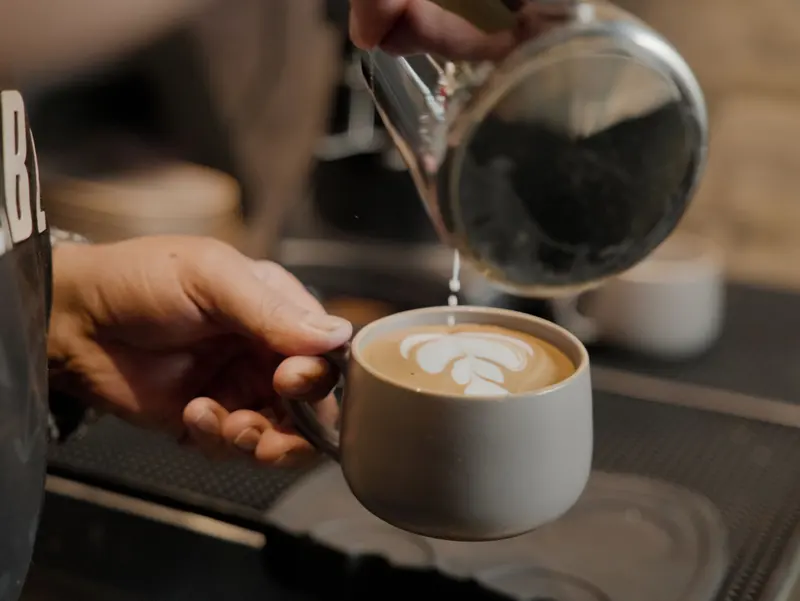
Roasters with their own bars: Fausto by the Auer Mühlbach, Vits on Rumfordstraße, SALLIS in Neuhausen, Standl 20 on the Elisabethmarkt and The Annamites in Sendling.
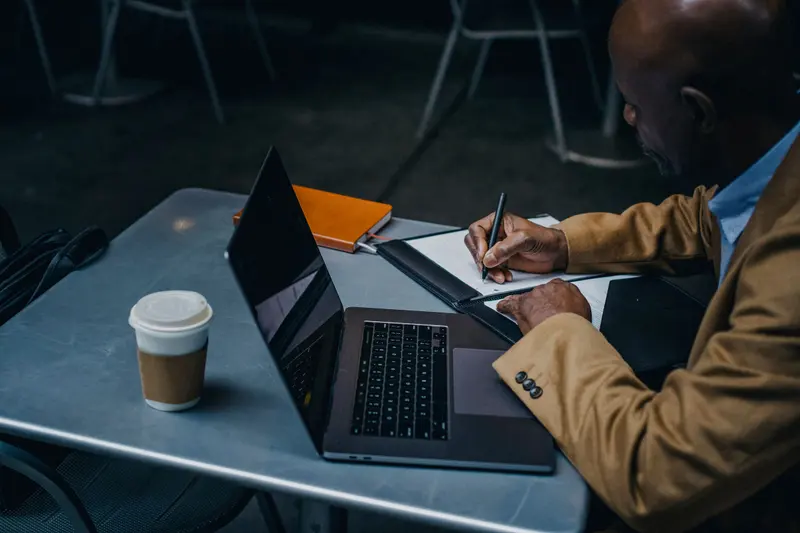
Photo: Mustafa Fatemi, Pexels License
More and more small roasteries have opened in Munich, part of the trend called third wave coffee, in which knowing where a bean comes from and preparing it carefully matter most. The city now has about two dozen roasteries, from Dallmayr to delmocca.1
The difference starts in the drum. Industrial coffee is roasted for two to four minutes so that it stays cheap and tastes the same every time; at Fausto and other small roasters a batch takes 15 to 20 minutes, and the coffee on Fausto's shelves is never more than ten days old.1
Local tip: Fausto teaches barista and latte-art courses at the roastery on Sundays; book ahead and stay for an espresso on the terrace by the Auer Mühlbach.1
Where these cafés are: Glockenbach & Isarvorstadt (6), Altstadt (6), Sendling (3), Haidhausen (3), Giesing & Ramersdorf (2), Maxvorstadt (2), Neuhausen & Nymphenburg (2), Schwabing (2), Au (1), Westend (1).
Nothing matches those filters here. See all cafés in Munich.
Klaus Wildmoser taught himself to roast while studying food technology in Weihenstephan, after a Konditorei owner promised to buy his coffee if it tasted like Illy. Today Fausto roasts 200 kilograms an hour, about 300 tonnes a year, in the Kraemer'sche Kunstmühle in Giesing, a building heated with wood pellets and powered by the mill stream.1
About 60 percent of the green coffee is bought directly from farmers or cooperatives. Fausto does without the Fairtrade seal, because many small farmers cannot afford the license, and it runs barista and latte-art courses on Sundays.1 The shop café on Birkenleiten opens at 11:00 on weekdays and 10:00 on Saturdays.
Man Versus Machine buys part of its green coffee through Nordic Approach, and The Barn, founded in Berlin by Ralf Rüller, runs two cafés in Munich, on Müllerstraße and on Hochbrückenstraße.2
Vits on Rumfordstraße sells blends, single origins and what it calls third wave specialties, and teaches home brewing in four seminar modules that can be booked singly or together.3 NINE FINE by the Hirschgarten roasts its own beans and sells the coffee it serves in bags at the bar and online.4
In Neuhausen, SALLIS developed its own roast profiles for each blend after starting out with coffee roasted by partners.5 Pacandé on Implerstraße buys microlots, coffee from a single farm, and sells its rarest nano-lots as special editions.6
Standl 20, a cabin on the Elisabethmarkt in Schwabing, pours JB Kaffee as flat white, filter or espresso tonic, all without bitterness.7 At the Viktualienmarkt, the Kaffeerösterei buys mostly from small sustainable farms that cannot pay for expensive certification.7
Kyso on Tegernseer Landstraße in Obergiesing is run by Maksim and Patrick, two Giesing locals with a portafilter machine, a house espresso from JB Kaffee and a vegan affogato.7 Alrighty in the Werksviertel roasts beside its café and lets visitors look into the roastery.7
In Neuhausen, SALLIS is on Donnersbergerstraße and NINE FINE's bar on Hirschgartenallee, by the park. In the old town there are sweet spot kaffee on Heiliggeiststraße, Kanso Coffee Lab on Theatinerstraße and Rösterei am Platzl on Orlandostraße.
Haidhausen has VogelMaier on Einsteinstraße and M8 on Mühldorfstraße, with Alrighty further east on Speicherstraße. In Sendling, The Annamites roasts on Fallstraße and serves Vietnamese drinks such as egg coffee and coconut latte; Calima on Nestroystraße is nearby.8 In the Maxvorstadt, humpback whale on Türkenstraße opens at 08:30 from Tuesday to Saturday.
By area: Altstadt Glockenbach & Isarvorstadt Haidhausen Maxvorstadt Schwabing Neuhausen & Nymphenburg Westend Sendling
Fausto roasts and serves on Birkenleiten in Giesing, Vits on Rumfordstraße, SALLIS on Donnersbergerstraße in Neuhausen and NINE FINE by the Hirschgarten. Man Versus Machine roasts on Müllerstraße, Alrighty beside its café in the Werksviertel, and The Annamites on Fallstraße in Sendling.
Industrial coffee is roasted for two to four minutes to keep it cheap and uniform. Small Munich roasters such as Fausto roast a batch for 15 to 20 minutes, buy much of their green coffee directly from farmers, and sell beans that are at most ten days old.
Standl 20, a cabin on the Elisabethmarkt in Schwabing, serves JB Kaffee as flat white, filter or espresso tonic. At the Viktualienmarkt, the Kaffeerösterei Viktualienmarkt sources mostly from small farms that cannot afford certification.
Free listings are free for good. A featured page gives you photos, a menu and your own URL, in your café's own design, for less than a coffee a day.